I beg to differ but thank you. I did it for the sake of trying it, you know as a sort of exercise!
1 Like
Set some chill music and keep doing small exercises and build on them as you go.
I’ll try! I have to take a look at the resources that Michelist posted
1 Like
I see, no worries.
If you are into painterly stuff, I always recommend watching videos by Marco Bucci, he’s an excellent painter and teacher! You can start here and explore the rest of his stuff:
Merging Shapes - 10 Minutes To Better Painting - Episode 1
If you’re just starting out and are not familiar with the mechanics of Krita itself, then definitely spend some more time getting comfortable with piloting the program. If you don’t know how to do something, search or ask on the forums, too!
Thank you again, I don’t know how I feel about painting actually, if it’s something I’d like to learn. I can tell you that paintings of landscapes can be nice to look at and there’s probably a lot that goes behind painting I’m unsure!
In my opinion, art is a great hobby that can enable you to experience and explore yourself and your innermost being—provided you are willing and able to engage with it. This is because it can reveal unexpected, even unwanted surprises. However, this does not have to apply to everyone.
Michelist
1 Like
Definitely! I just want to make nice stuff overall, in this case drawing mostly. I’m watching the series for children that you suggested right now while trying to follow along.
2 Likes
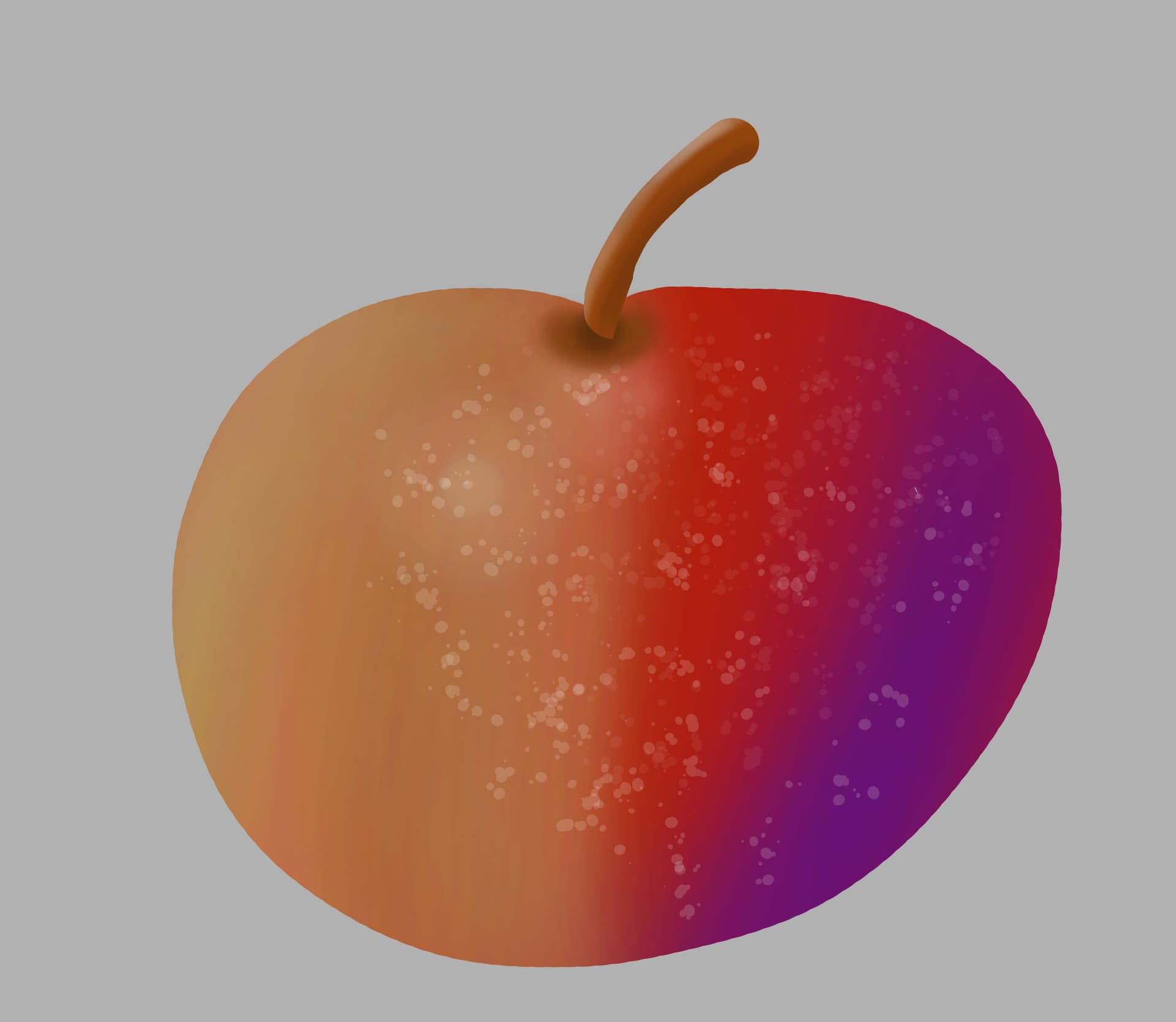
I know the thread is a bit old now but I saw this while browsing for an unrelated topic and felt motivated to make an account -
The way I learned was kind of a cycle of trying to get books and supplies and do things from them, then putting them down for a few years and coming back. My most recent attempt has stuck for a few years so I think I have the habit now. Last year I made a document for myself explaining what I wanted to know when I was younger, just as a kind of review or “final exam”. So I’ll summarize that here.
The highest level starting point I would use for art is the philosophical concept of verisimilitude: making things believable or truthlike through their resemblance. When we go to draw something we’re engaging with that concept, or against it: maybe we want to describe unbelievable things, or draw abstractly. But typically we have the goal of “plain representation” - making some marks on the canvas that look like the things we see.
The path that’s taught in the traditional conservation of Western classical art goes deep into every facet of representation, breaking it down into fundamental concepts, then putting them back together through various techniques and training the student to access those techniques naturally, like learning to write letters, then words, then sentences, then writing paragraphs and essays.
In illustration, animation, comics, video game graphics, etc., those same fundamentals are used to communicate information about a design, e.g. “drawing characters in an anime style” is really about selective representation and adaptation: the character is described a certain way, so you adapt it with some visual information that bring out the verisimilitudes in a realistic sense, like human body shape and proportions, but then allow other aspects like the size of their eyes or the details of their anatomy to be exaggerated or simplified down. The fundamentals are the vocabulary making it easy to do this deliberately instead of “guessing and checking”.
So - how do you start accessing the technique? At the very start, someone who can already write and count can do two things: they can count out marks on a ruler or a grid, and they can trace. Doing those two things is enough to start to make copies(copying with a grid dates back to the Egyptians; and copying by tracing became increasingly powerful as we got better with optics and mirrors). Many people are unsatisfied just doing that, of course.
The two ways to expand technique that worked really well for me are:
- Watch a drawing demo on video and try to copy its motions. We’re reducing the whole act of drawing to “monkey see, monkey do” so that we can learn the tacit details - things that aren’t communicable by listening or reading. It’s like having the master literally guide your hand. Turn off the sound, slow it down, use a video where you can see the hand moving clearly without edits, and don’t worry too much about getting an exact copy. There are good demos of this type all over, but for a generic starting place I would suggest Proko’s Youtube channel.
- Find a drawing book on Libby or Internet Archive(two web sites with free lending-library systems) and start copying the illustrations in it, starting on page one and continuing through each page. Of course, you can read the words, and draw more selectively too, but the point of this exercise is to get used to the idea that there’s information in the drawings themselves that you’re accessing by copying instead of just skimming over it while you read the words, and really “working through the book” is done through that process. For this exercise I suggest Jack Hamm’s books as an intro. They’re all good and very dense with stuff to try.
If you do those two things over a period of months, just using ordinary dollar store pencil and paper(digital also works but can add some anxiety over using the right gear or configuration), a lot of the beginner problems in drawing will sort themselves out, and it becomes easier to judge whether a tutorial is doing something useful for you.
The progression from there would be to engage with the classical “hierarchy of genre”. There’s a Wikipedia page on that, but basically the idea is that there are certain genres of art that the student is progressing through to reach those elaborately staged masterpieces. The entry point for this is usually still life. I thought still life was very boring until I started collecting toys and statuettes that engaged with topics I enjoy(e.g. Hatsune Miku, Anubis, Pegasus, Spider-Man) instead of trying to draw silverware and fruit bowls.
Lastly, there are lots of art challenges and events online that are a good motivator to draw outside your comfort zone. This month, for example, there’s Artfight, a character drawing event. The journey never really ends since there’s always a new way of trying to approach art.
5 Likes
Thank you for the detailed reply, I check the forum from time to time and ended up seeing the notification on the topic being updated.
There’s a lot of info to process but I could definitely give it a try, I do prefer to use digital as I have less things lying around me in general. Lately I’ve been just trying to draw bodies based on this video
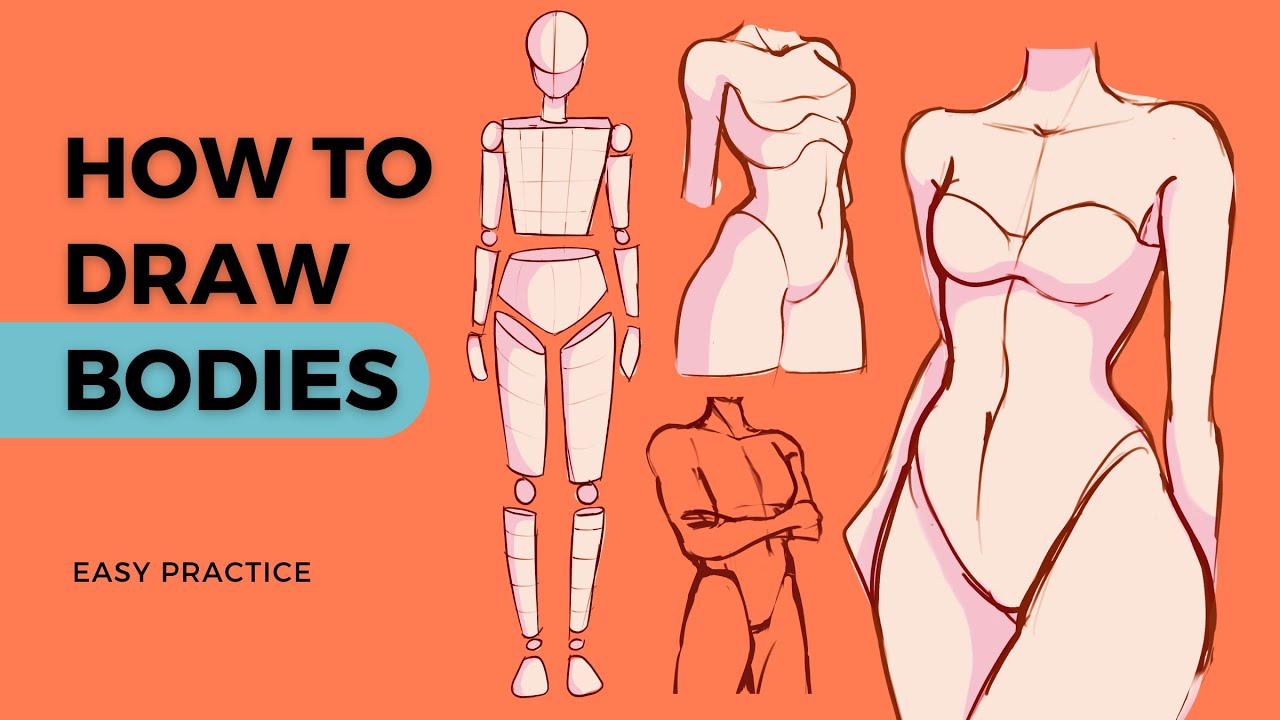
I’ve been doing this for 10 days and filled a folder with 50 pictures so far, is it useful? I wonder.
Like you said in your post I don’t have that experience yet to gauge if a tutorial is useful because this is concept you just brought up with your post and I’d have to try your method to get an idea.
Thanks again for the reply I’ll keep checking here for an eventual answer of yours.
3 Likes
If you like digital and it doesn’t feel inconvenient, by all means, stick with it. Digital does make a tradeoff in that it’s easier to arrive at a specific design, but it never stops you from zooming in and making thousands of tiny edits to do it, which lets you spend a lot of effort that isn’t always necessary. Traditional materials let you approach the process more as a live performance where you learn to work with mistakes, so they encourage you towards finding a way of doing it right the first time - your habits become a lot faster when working in materials like ink or charcoal.
That video is basically fine - there are a lot of tutorials giving roughly the same advice. It has some pitfalls that are also standard in Youtube tutorials, though.
- Its discussion of proportion is limited to a stereotyped ideal figure with canonical ratios; those proportions are modified as soon as perspective is involved, so while it’s useful to have them as a way of designing an imaginary figure, it’s an incomplete way of thinking about proportion. What proportion is actually about, as a fundamental concept, is “how do I divide up the page?” You can’t have a drawing without considering that, so it’s something worth investigating repeatedly and in multiple contexts. This discussion is rarely taken to any depth in Youtube tutorials because everyone is copying from the Bridgman and Loomis books on figure, and those both assume the student has encountered this question before and can use their ideal figures as a helpful supplement to their own observations from life or photos. This leads to the next issue:
- It skips to forms, when shape is the earlier fundamental to learn, since it deals with proportion on the page in a more direct sense. Our brains recognize shapes and silhouettes before taking in any details, so if we get really great at converting a shape we see into some rough marks, we have a good starting place for drawing as a general skillset. The blind contour exercise is a way to expose yourself to a lot of shape - it’s one that I warm up with daily: https://youtu.be/M1eiEsZ2Lig
- It skips from drawing simple primitives from life to drawing from photos, which deemphasizes the utility of life drawing. The reason why you want to do life drawing is because it exercises your understanding of form: the image you’re taking in from life will use both eyes and depth perception, and as your head moves around, the object you’re looking at will parallax, creating a natural drift in proportion that is corrected by applying the simplification to primitive forms. When you use photos, it’s normal to rely on ways of observing that are focused only on the shape, and that can make the results feel “flattened” even if you’re trying to find the forms in it.
The reason to do still life, specifically, is because that lets you start drawing subjects in a “complete” way, but also a controlled context where you can do it at any time of day, whenever you want. One statue of a figure - even a pocket sized one - is good for thousands of still life studies because changes in perspective and lighting conditions will change what you see in it each time. And there are a lot of good options for collecting subjects you like and want to study, whether it’s characters, animals, cars, etc.
Thank you for the reply! I imagined there had to be something off with the tutorial and the whole process of drawing bodies.
Now I’m confused though on what exactly to focus on, since in your first reply you mentioned the whole copying the motions of the person that is drawing but not sure I can apply that to digital.
Would your second point about the copying illustrations work? Then you did bring up the topic of drawing stll life, recognizing the simple shapes etc, and now I’m back at the start and it feels aimless again
There isn’t one path - but at the same time, each of the suggestions are suitable to a certain kind of scenario.
Copying from a book is something you can do right now, so do that. Come back to the thread after you get some work moving through your hands.
1 Like
A small update. I’ve been drawing what I find in the book of Jack Hamm titled, “drawing the head and the figure”
2 Likes
I did a lot of traditional drawing and painting before changing to digital media. And it was like learning again, for me, digital drawing is another technique. What helped me a lot is looking other artist works and videos and having a lot of reference images and resources. If you can draw with real references (no photos) I thinks it’s better for learning. And having a lot of patience because we are always learning. Good luck! 
1 Like
Thank you!