I’m working on freehand sketching, and I find it quite difficult.
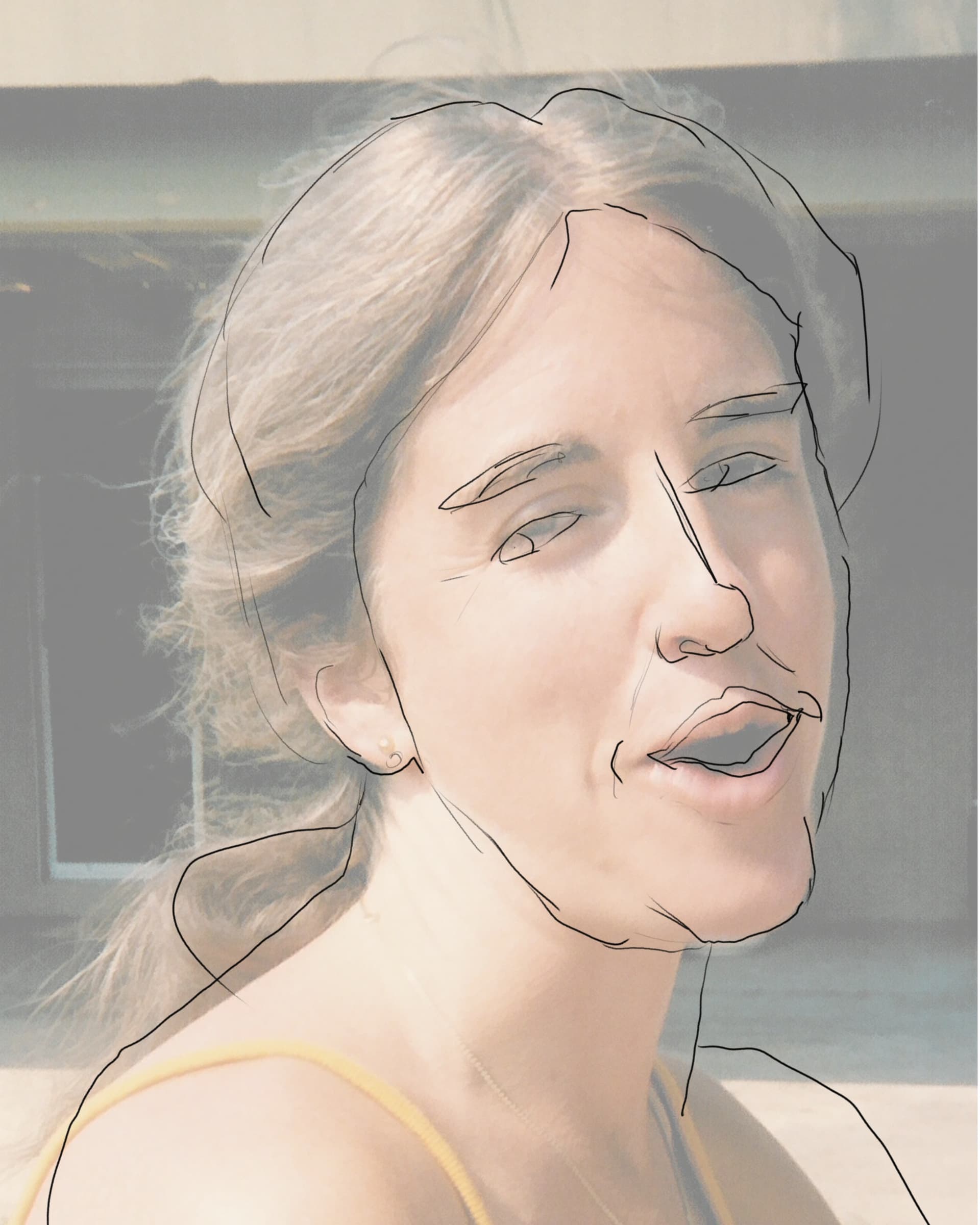
I put in a reference layer, mark out the chin and the top of the head, then remove the reference and try to draw the face, viewing from another reference image to the side. No grid, no measuring. I then put the reference back to see how I did. The reference image is my own. You can see the results here:
Taking measurements is the only way. You can get very accurate, but it involves “detaching yourself” from the subject, like in this example, not seeing a person, but a collection of abstract shapes, relationships, angles and distances.
For that reason, I would say it’s a rather different set of skills, although being good at measurements will always pay off in other situations, such as when you’re not strictly copying, but need to convey the likeness of a subject.
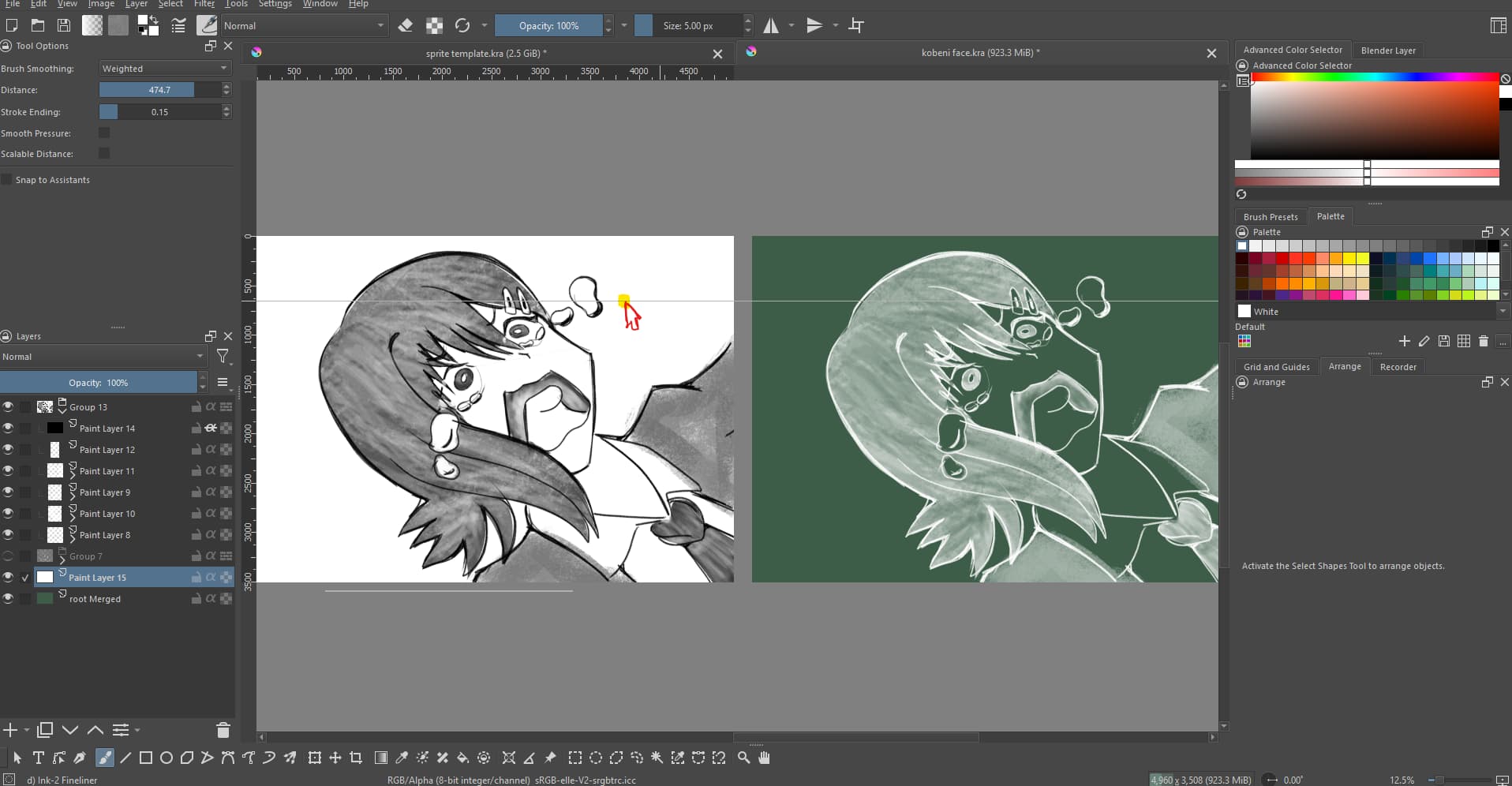
when you select the pencil tool the assistant tool is going to show you the infinite line horizontal line that is going to cover both, canvas and reference, like this:
when that you can start sketching with some guidance in real time without grid but keeping the benefits that a grid would give you and at the same time you need to keep figuring out some proportions doing the sketching.
Post data the drawing is 100% original mine i just used it as an example
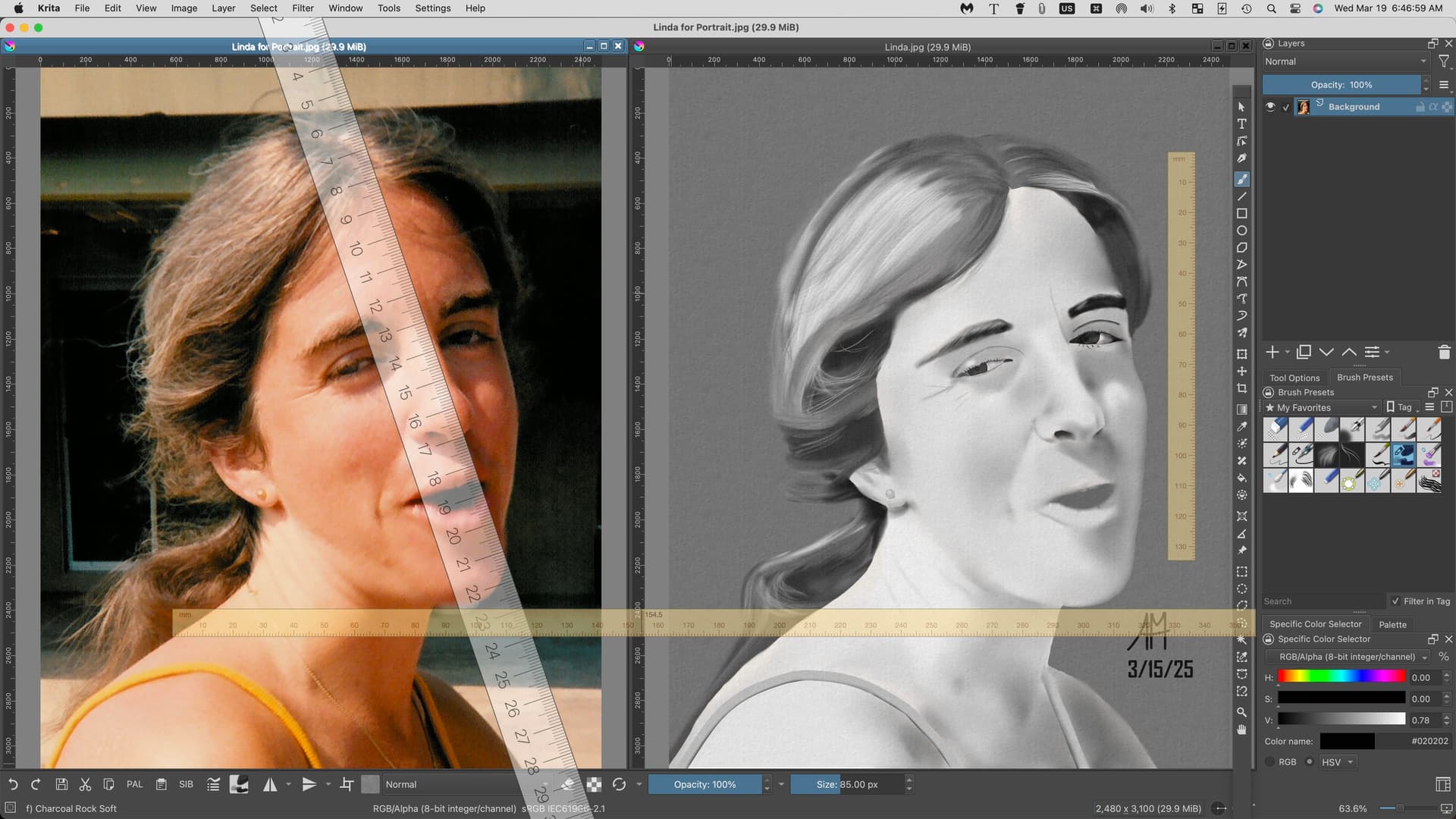
Thanks, guys. I like my reference in a separate window, and I use the free Mac apps Ruler and Free Ruler for measuring placement and angles. Like this:
That shows the final result of my drawing, after I corrected the errors in my freehand drawing.
But here’s my thinking on measuring, grids, and even Loomis heads: They are, in a sense, just less accurate ways of tracing. That is, I can easily trace over the reference, so unless measuring will improve my observational or freehand skills, why not just trace? If I were to spend a lot of time carefully measuring, I could probably get a result just as good as tracing.
Tracing has its place, but I kinda see it as cheating. Is careful measurement also cheating then?
No, and tracing isn’t cheating either, it depends on your end goal. If your objective is to create an accurate painting of a person, tracing can save you a lot of time and achieve a better likeness of the model.
Tracing is only bad in a few specific contexts:
Tracing somebody else’s work - plagiarism
Tracing when doing practice sketches - will hinder your skill, because you don’t need to observe carefully
Tracing references and bragging that you drew it by eyeballing, etc.
Lastly, tracing can be a great tool to analyze and break down paintings that you want to learn from. It’s something you do for your own benefit, and there’s no harm in that.
In that case having a good memory and remembering things right is also just a less accurate way of tracing.
Every human has a different level of how they can imagine things in their head up to a point when they can’t create any visual image in their mind at all (which is called Aphantasia)
Depending where you are on that scale you probably need some extra tools when you want to draw accurately and measuring is one of these tools. There are several ways to do id. I normally look at relatives sizes of the objects and use them to measure. Other people like squinting their eyes and use the size of their pens eraser for measurements. Nothing of this is cheating. Tracing is also not cheating except when you lie about it.
I am agree with this fellow user, however personally i don’t like to trace because I focus on “animanga” style and I prioritize to draw from imagination. i prefer to copy from eye instead of tracing. I would use tracing if someone ask me to do something that needs to be equal to the reference.
I have level 4 aphantasia. The scale isn’t true to what I can see, the images are not only very barebones but also pretty fuzzy and short lived. It makes my natural accuracy and composition skills particularly bad. Yet, I still paint. The trick is what Takiro said, you work with what you have, you use extra tools or weird methods when the classic approach doesn’t work for you. You work around your limitations.
For accuracy, there’s a practice method I still want to try but sounds very interesting that uses tracing:
You trace over you subject first.
Then you draw it from reference, overlay it over the ref and correct the mistakes. Rinse and repeat until you see improvements.
Now you draw it from memory and again, correct it by tracing.
Your unconscious drawing biases - like using certain angles for certain features, etc - is something that impacts accuracy negatively. This method forces you to use angles and foreshortening you wouldn’t otherwise, and to see your biases so you can correct them. Sometimes the issue isn’t that you’re not measuring right, it’s that so you’re stuck in doing things in a certain way you can’t do them differently without the extra nudge this first try gives you to put your mind at ease.
Another technique I like is negative space. This one is good for silhouettes, finding landmarks in a figure and getting proportions right. Instead of trying of trying to measure the distance from an elbow to a wrist for example, you look at the empty space surrounding them. You draw the shapes of the space surrounding your figure. You’re not drawing an arm bent at the elbow, initially you’re drawing the triangle of the empty space between the arm and body.
Also, if the point is actually studying something else, not mechanical accuracy when drawing, you can try something else entirely. I have a pretty good depth perception for example, and learn faster from sculpting than outright drawing. You got to examine your skills and figure out your strengths to use them in your study approach.