Hey, I think this topic might be suitable for what I wanted to get feedback on.
I just finished reading / skimming through Drawing on the Right Side of the Brain (thanks @Elixiah and @L_JDub for the recommendation), and I’m a bit conflicted. This book teaches you the techniques of realism drawing and goes into a lot of detail why this is difficult and requires direct instruction.
I think this is a very valuable book. My main take away from it was that perceiving subjects is hard and your brain works against you in many cases. It reassured me that there’s nothing wrong with me and I’m not “just bad” at eyeballing things. It’s just how we humans are wired and there are ways to deal with our natural perception error.
However, I also came across thisDraftsmen podcast episode, where Mr Marshall voiced some criticism against the book. A lot of it had to do with his personal circumstances, but one take away really struck me. He said he was already very skilled at drawing from life at that time, but could not draw from imagination at all. Sadly, the book offered him no advice in that respect.
This brings me to my struggle with it. I don’t really want to train myself in realism drawing. I need the flexibility of drawing characters from imagination and in various poses. I’m now on a quest to somehow combine the techniques from Drawing on the Right Side of the Brain with my construction-based methods (gesture > mannequin > detailing, etc.). Obviously, I still do the studies, but I’m worried that perfecting the copying process won’t help me with my overarching goal…
I’m curious if you guys have faced a similar problem and whether you have any suggestions and insights. Thanks.
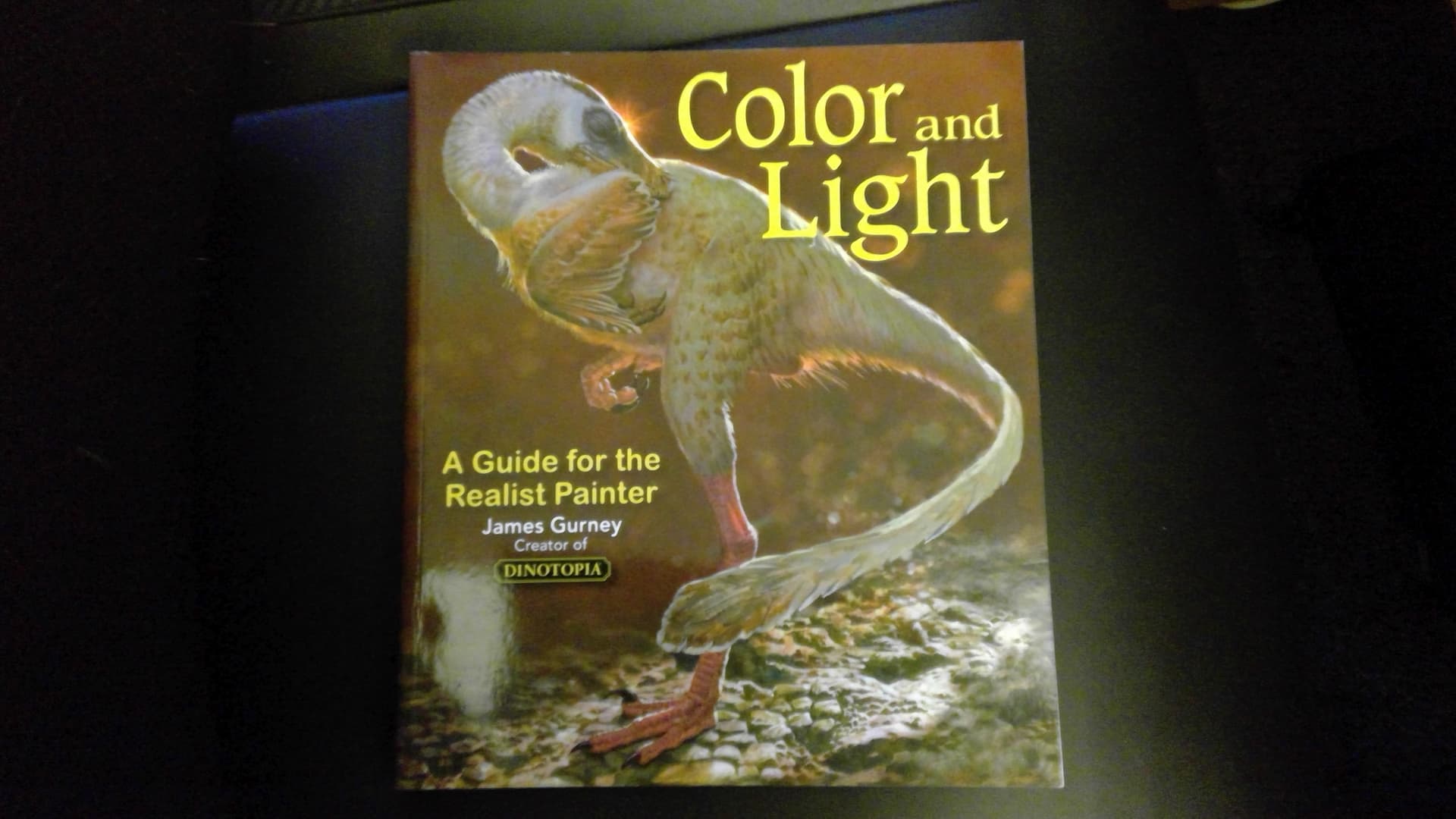
I’m not sure if this is what you’re looking for, but I found a book which teaches you how to realistically render stuff pulled completely from your imagination. So you don’t have to directly copy something already there, you can create the subject from your imagination but still end up rendering it as realistic as possible. I need to take my own advice and study it more as colouring and lighting things realistically without a direct reference is my weak area.
Thanks, I think it will be very useful for me as well!
What I was talking about above has more to do with the basic stuff and streamlining the process of sketching (getting a final rough). Even after around 150 sketches (my estimation), it still feels clunky and tedious and worst of all, as if some if it was down to sheer luck. I want to speed up and improve that part of the process, which to me, is the critical part.
I’m now focusing on construction-based methods (like Loomis’) and trying to augment them with improved sighting, especially breaking free from the perception errors (what Drawing on the Right Side of the Brain referred to as drawing in the R-mode (right half of the brain)).
It doesn’t surprise me that the book didn’t help him. Drawing on the right side of the brain provides people with a starting place to understand how to take something abstract (what they see) and represent that on a 2D surface. It’s an introduction to some techniques. Early on the author shows how to break down objects into simple 3D shapes, but that’s just scratching the surface.
The artist has to keep practicing those techniques, and should learn as many as they can. As the techniques are applied to subjects, the artist starts to develop a memory of the image, the translation, and the simpler forms. Some small percentage of people are really good at manipulating that 3D information in their mind and can invent new things that are close to things they’ve drawn before with ease. Most will need a lot of practice (and often will have to lean back on reference to fill in gaps), and some few will never be good at it.
And representing the shape of things is just one part of it. Depending on your style, things like color (as mentioned above) and texture may also play a big part in the shorthand you want to learn to draw from imagination (e.g. moon lit scene vs sunset, fur coat vs t-shirt, etc.)
The more you understand about why a thing looks the way it does (whether it’s shape, color, or texture), the better you will be able to manipulate it in you head and represent that in your art. Sometimes that understanding is intuitive (it just “seems” right) and sometimes it requires a lot of time breaking it down in different ways and repeatedly.
There are books where artists share how they practice and their shorthand. For me, the first time i saw something like this was Figure Drawing Without a Model - Ron Tiner, and that’s just stuck with me. I forgot about doing that practice for a long time, but in the past year started again. Every time i see an inspirational pose, i’ll study it just by looking, put it away, and then draw the basic form from memory. Compare and correct it. It’s been extremely helpful in just imaging poses and expressions.