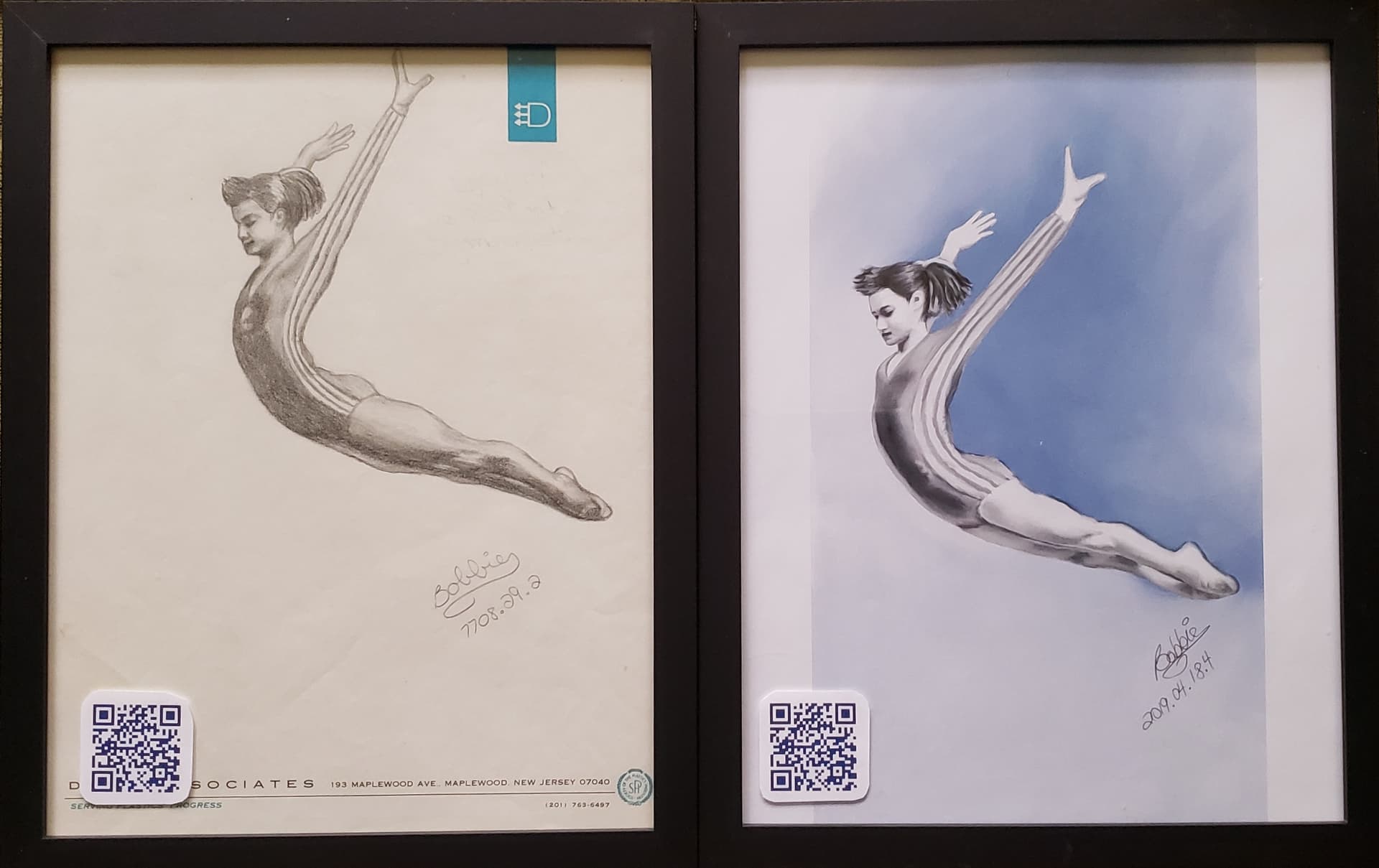
“To everything there is a season,
A time for every purpose under heaven: …
A time to keep silence,
And a time to speak;”
—Ecclesiastes 3
I would like to start a thread of a very special kind. Generally speaking, artists don’t write or talk that much because: To get better at art you don’t talk about it, or talk less and do more art. This is generally true not just with art but with everything else in life. We get better at doing and not talking, and in this context, the reality is that we’re either talking or reading. If you’re reading then someone is talking. If we’re not reading to take in theories and principles, then our art practice can be purposeless and aimless and we won’t improve much. Theory and practice are inseparable. Beginners often skip the theoretical and jump straight into the practice because they want quick result. Little do they know, they’ll be running back to the basics and fundamentals down the road because the fundamentals of art are essential and timeless.
Before I go ahead with this thread, I need to point out that I’m a Christian, and being a Christian, my thoughts and worldview are shaped by a biblical worldview. I’m not here to preach and tell people to get saved, even though I’m open to having such a discussion (you can always PM me). I believe we’re all here to learn more about Krita and art so that’s my main focus here. I’ll be quoting and referencing others, both secular and religious. Here and there Bible will be quoted because there are a lot in there that can be applied to art! I consider myself a slow reader, but when it comes to art, I skim through a lot of books and pick things up very quick. The reason for this is simple: There’s nothing new under the sun. People just rehash the fundamentals of art in various ways. You’ll be surprised to find out that the Bible actually teaches the truth of this.
Let me start off with two examples to give you an idea of how I will approach this thread. First example will be from the Bible, and the second will be secular.
Jesus says in Matthew 16:26,
“For what profit is it to a man if he gains the whole world, and loses his own soul? Or what will a man give in exchange for his soul?”
The world of art is very competitive, so much so that people will put in hours to train so that they can reach the top. Five to six hours a day seems to be the recommendation, and I’m sure some will give up five or more years of their lives in exchange for top art skill that would take years to acquire. Few would pause to consider the words of Jesus. What will it profit you if you gain the whole world and lose your own soul? Or to put it another way: Lose your own health? Lose your marriage? How about a real world example…
One of the major potential problems with double-digit hours a day dedication is health. I went the 15-ish hours a day route, which resulted in messed up pinched nerve which got to the point of nearly amputating my arm (if it came to that, I’d probably kill myself, like, I’ve been drawing since I was born practically), somehow saving it, but after 2+ years, it’s still 10-ish times weaker than my left arm, hurts like hell 24/7 and it’s very uncertain whether it’ll actually heal to a reasonable point (at least to the point of not having to spend half of day lying in agony and other half not lifting things heavier than a spoon). … Now, of course, this is something that won’t happen to everybody, but I am not exactly prone to such injuries and also, at the time I had already developed some kind of physical habit and tuning to that type of exercise - being through atellier for ~3 years and going through the university for ~5 years for a master degree. That means I practiced for 4-6 hours a day already for years. With no fatigue whatsoever. With no signs of wear and tear, so to speak. But a mere few months of 15 hours did an irreparable damage and I can only hope to be able to draw at least for more than 10 minutes a day, which I certainly can’t for the past two and a half years.
That’s an excerpt taken from a YouTube commenter by the name: Djul. You can read it in full here: https://www.youtube.com/watch?v=k3Al7QAS89s&lc=UgiAeaDJ5KAE9ngCoAEC . Artists don’t often think about eternal or temporary consequences such as health in this life. But they should as they pursue art or else they’ll be thinking about it when neck or hand problems become a reality.
In one of his books, Andrew Loomis says,
The sculptor starts with a form of the general shape of the face attached to the ball of the cranium. He could not do otherwise. I present this simple plan in this volume since it is the only approach that is at the same time creative and accurate. Any other accurate approach requires mechanical means, such as the projector, tracing, the pantograph, or using a squared-off enlargement. The big question is really whether you wish to develop the ability to draw a head, or whether you are content to use mechanical means of projecting it. My feeling is that, if the latter were the case, you would not have been interested in this book. When your bread and butter depends upon creating an absolute likeness, and you do not wish to gamble, make the best head you can by any means possible. However, if your work is to give you joy and the thrill of accomplishment, I urge you to aim at the advancement of your own ability.
His words should we weighted and taken into consideration. At the end of the day, art is about telling a story. Grammar is a means to an end, and we learn them so that we can better communicate our thoughts and ideas and tell stories. Art seems to be something else because there are a lot involved in the process of art making. The audiences don’t care how it’s done, but as artists we care and think much about the creative process. Digital tools are constantly advancing and making art a lot easier to create. Why would anyone want to spend years studying human anatomy when they could easily trace on top of a 3d model that they either modeled themselves or got it from another artist? That’s the question, and only you can answer that.
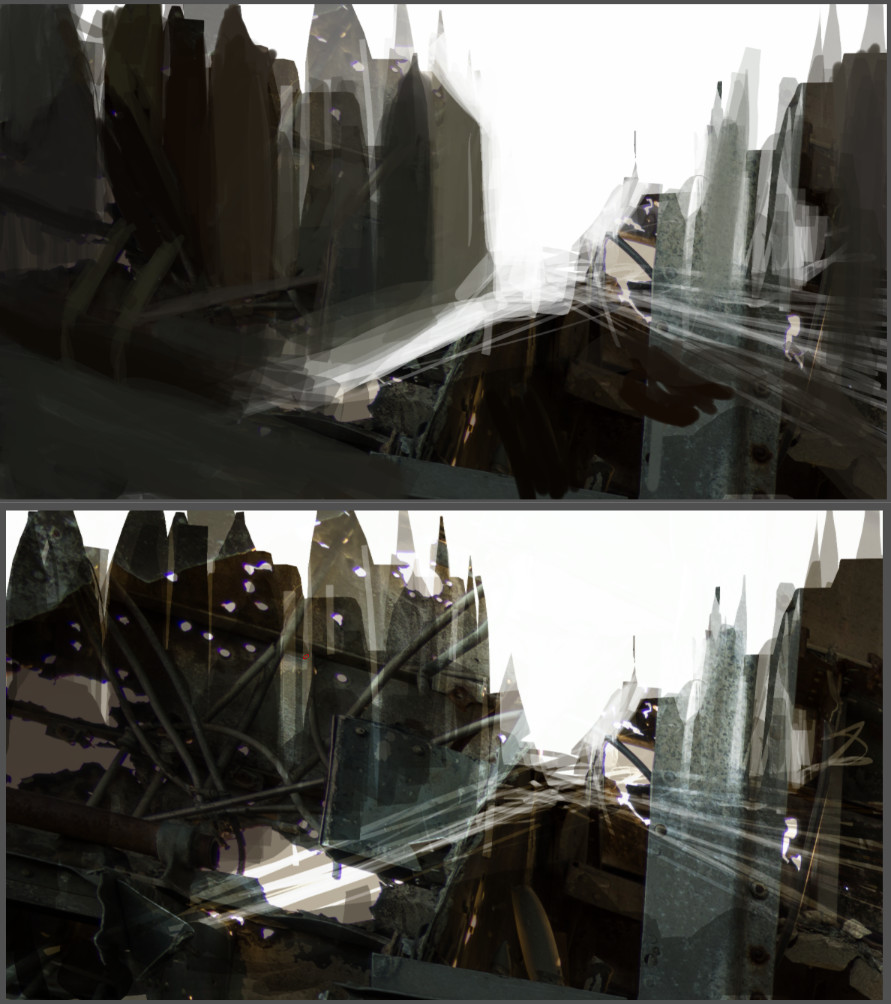
“When your bread and butter depends upon creating an absolute likeness, and you do not wish to gamble, make the best head you can by any means possible.” — That was said at a time when ‘photobashing’ and ‘3d scanned model’ wasn’t a thought in the mind of any artist. Today, that’s what a lot of artists are doing: Paintover and photobashing to achieve a high level of realism. Or in the case of 3d, actual human are scanned to be used as a basemesh. Why would you want to model from scratch? Again, only you can answer that. Beginners that are just starting out and don’t have a mature view of art often see many things artists do as cheating and not real art. Give this lecture a watch if you haven’t. The title is a clickbait but the info is good to take into consideration as you pursue digital art: https://www.youtube.com/watch?v=CYbYvImd7Bw . Concept art is not dead, the old way of doing things might not be in high demand, but concept art is not dead.
If you don’t mind me quoting the Bible like how I’m doing it here, and want to see more contents like this, let me know. Also this is an open thread so feel free to discuss and share your own insight and commentaries. My plan was to put all this (and more) into a PDF one day, but I don’t think it’ll ever get completed. I’ll share more insight and thoughts later whenever I have the chance.


 Cool!
Cool!