Here ya go. No matter what the color is
Character Concept
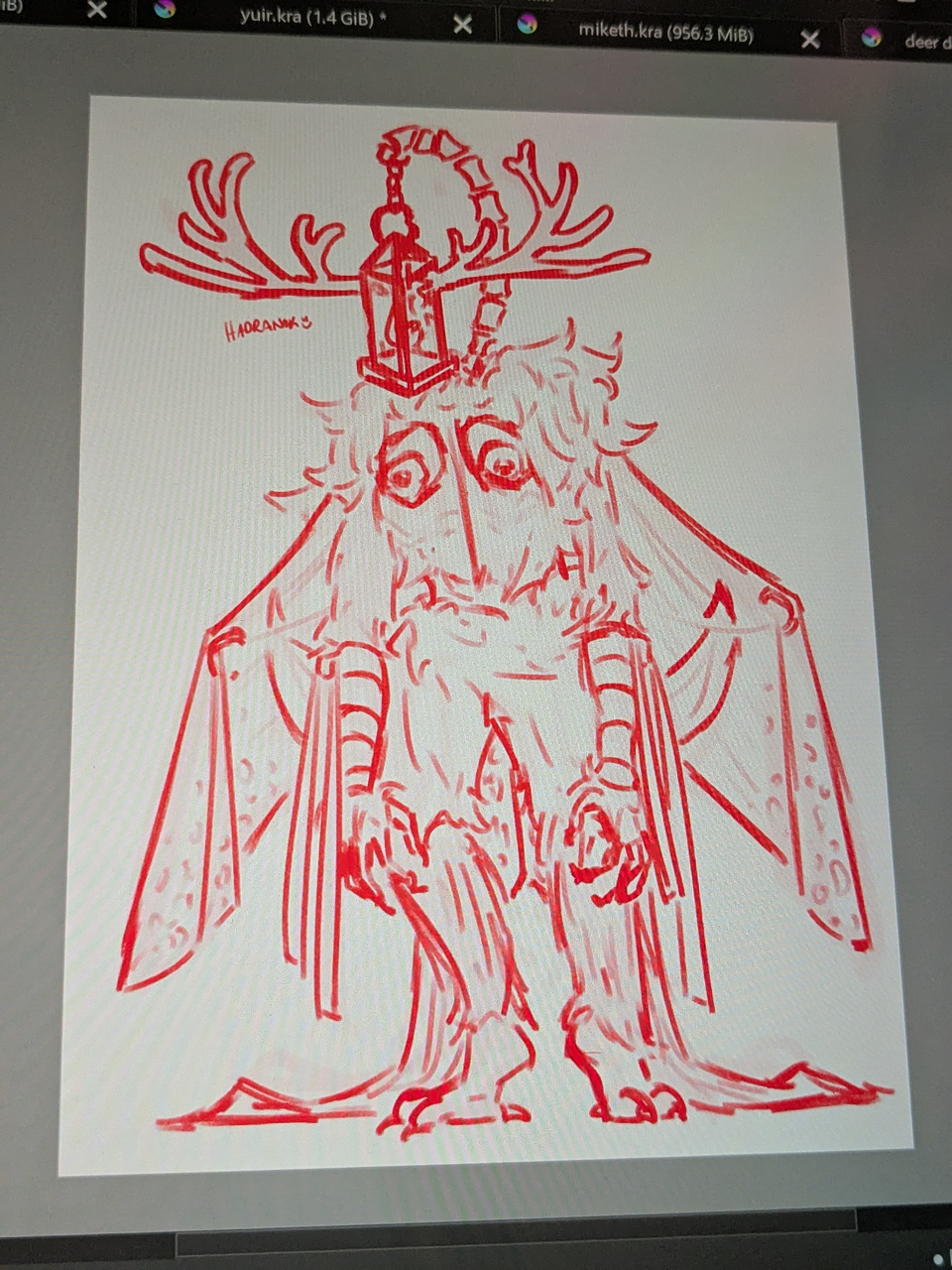
Lantern Moth Wanderer
A tall nocturnal figure that resembles a moth-like humanoid traveler whose head is an old lantern. The creature glows softly in darkness and moves slowly through forests and empty streets at night like a drifting light.
The design is meant to be recognizable from silhouette alone: tall frame, hanging lantern head, wide wings.
FULL APPEARANCE BREAKDOWN
1. Lantern Head (Primary Visual Feature)
The most striking feature is the lantern replacing the head.
Structure
-
The lantern is shaped like an old metal camping lantern, slightly rusted with age.
-
Its metal frame is thin and curved, protecting four cloudy glass panels.
-
The glass is slightly foggy and scratched, giving it a weathered look.
Light Source
Inside floats a small pale golden flame.
Unlike a normal flame, this one moves with emotion:
-
Calm → slow flickering glow
-
Curious → flame stretches upward
-
Alert → flame sharpens into a tall bright spike
The flame never burns the lantern — it simply floats.
Lantern Crown
The top of the lantern has a ring handle, slightly bent, which sometimes swings gently when the creature walks.
Two thin moth antennae grow from the sides of the lantern frame.
They look like delicate wire rods with fuzzy tips.
2. Neck Structure (Lantern Support Spine)
Instead of sitting directly on shoulders, the lantern hangs from a curved spine extension.
Spinal Hook
-
A thin curved bone structure rises from the upper back.
-
It arches forward like a shepherd’s crook.
-
From the end of this hook hangs the lantern by a small chain.
This gives the creature a slightly hunched silhouette.
The lantern sways gently when the creature moves.
3. Upper Torso (Moth Fur Chest)
The chest and shoulders are covered in dense moth-like fur.
Fur Texture
-
Soft
-
Powdery
-
Slightly dusty
Color palette:
-
pale gray
-
ash brown
-
faint specks of cream
Chest Pattern
The fur naturally forms two dark circular shapes resembling large sleeping eyes, similar to patterns seen on moth wings.
These markings make predators hesitate because they resemble a larger creature watching.
4. Shoulder Structure
The shoulders are slightly rounded and covered in thicker fur.
Hidden beneath the fur are wing joints, similar to where an insect’s wings would attach.
Small tufts of fluff extend outward like shoulder feathers.
5. Arms
The arms are longer than normal human proportions, reaching slightly past the knees.
Upper Arms
Covered in short, soft moth fur.
They are slender but flexible, designed for slow graceful movements rather than strength.
Forearms
The forearms are wrapped loosely in aged cloth strips, like a wandering traveler’s bandages.
The cloth has:
-
small tears
-
faded stitching
-
faint dust marks
Hands
The hands are delicate and expressive.
Features:
When the creature moves its hands, the lantern light reflects off them faintly.
6. Wing Structure
Behind the back sit two large moth wings.
These are one of the most visually dramatic parts.
Wing Shape
The wings are wide and rounded like those of a luna moth or silk moth.
Each wing extends far past the creature’s shoulders.
When folded they resemble a cloak draped down the back.
Wing Texture
Instead of thin insect membranes, the wings look like soft fabric banners.
They appear slightly worn and dusty.
Wing Patterns
The wings display subtle patterns:
-
pale moon circles
-
soft speckled dots
-
faded streaks
When the lantern shines behind them, the wings glow faintly.
7. Lower Torso
The lower torso is slimmer than the chest.
Fur becomes thinner here, transitioning into softer skin along the abdomen.
This part of the body allows the creature to bend forward easily while walking.
8. Legs
The legs are digitigrade, meaning the creature walks on raised heels like an animal.
Thighs
Covered in thicker fur, giving the legs a soft rounded appearance.
Lower Legs
Long and slightly curved backward.
The fur here becomes fluffier and more moth-like.
Feet
The feet have three forward toes and one small rear claw.
Each toe ends in a small curved claw used for gripping:
Despite claws, the creature walks quietly.
9. Movement Behavior
The Lantern Moth Wanderer moves slowly and deliberately.
Typical motions include:
-
silent walking through tall grass
-
gentle wing openings when balancing
-
lantern swaying with each step
When it jumps or glides, the wings open silently and allow it to float down slowly.
As it moves, tiny dust-like particles fall from its wings and glow briefly in the lantern light.
Silhouette Summary (For Artists)
The recognizable outline should show:
-
hanging lantern head
-
curved spine hook
-
wide folded wings
-
tall slender body
-
digitigrade legs
Even in shadow, it should look like a walking lantern with wings.


 !
!