Yay! I drew something and I’m liking it! Hide channel started a new series to draw a body once a day. Here are my attempts from yesterday and today. Of course this is not original work! (I hope that’s OK to post?)
The cat girl took me two days, around 3 hours total. The ballet girl a bit less, something shy of 2.5 hours, but in one sitting. I think this is a really good exercise.
It’s very OK to post this because you’ve explained what you’ve done and you’ve given a link to the original tutorial videos. This is of benefit to the creator of the tutorials
What I find particularly difficult is to get the initial rough shapes right. If that part is not caught and fixed early, it will skew the whole drawing and it won’t be on model. And noticing these mistakes is still challenging for me. This time I ended up making tweaks over and over and it took a lot of time. In hindsight, it’s probably better to get it 80% okay’ish, and move on. If I drew two decent poses in the same time, it would probably be a net benefit. Anyway, I’m glad I found it in me to get it finished.
There we go, I made it to part 4. For this one I used Kamvas rather than Giano. Using a display tablet feels almost weird to me at this point, yet somehow I seem to get the proportions a bit better with it. Maybe it’s because the draw area is smaller compared to a 28 inch monitor. I will experiment with zoom levels next time.
I used a different approach with the rough as well, rather than drawing it once and refining, I drew it a few times from scratch and then compared to the reference, until I got it mostly right. It seems like a waste, but may be a better learning experience actually. The overall balance is still a struggle, but I just need to get more mileage in.
Going back to my Hide study routine, I guess! This one is based on March live stream, if I recall correctly. I wanted to do some quick studies, but somehow ended up coloring it. I need to focus, and get a hang of more simple and focused studies, e.g. on the eyes, or the hair. Anyway…
The background is just tossed together quickly without any reference (ugh) and adding Japanese text is probably cringe, but whatever Time elapsed: 2 hours
This one was optimized for speed, so no clean line art! Flat-filling helps see the mistakes… Man, it does feel bad when you think you’re done and then notice the arm is kind of too thin or something (I fixed it, I think?)
Wanted to post something as my current painting turned out to be a big project (well, at least at my level…). Would be a shame to drop it now, but man, it’s a slog! I should really keep it simple until I get more experience… (I feel like I said that recently and yet here we are, lol).
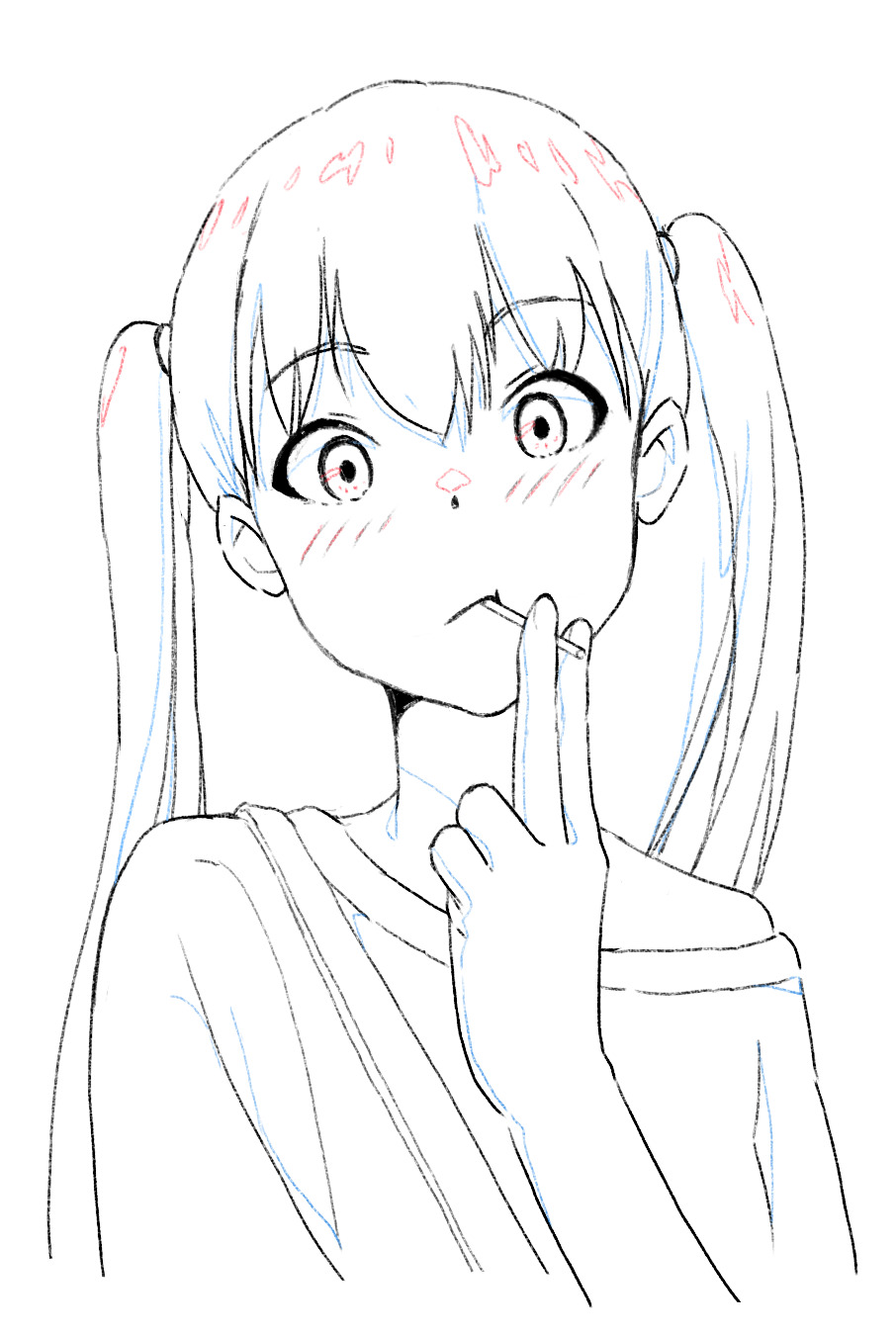
Anyhow, today it’s another sketch from Hide’s materials. I didn’t say “quick”, this one took 1 hour, due to corrections the following day (got to reset those eyes).
I’m glad I decided to post it, because it made me go over it again today and I noticed and fixed a ton of mistakes (naturally, there’s more still).
// essay mode on – feel free to skip, sharing my thoughts on art practice and comments on a book //
After churning out pictures for Inktober, I wanted to go back to practicing a bit more, but then it got me thinking, “what actually constitutes a good practice”? I definitely don’t want to fall into this “meaningless practice” slump. When I look back on my artwork folder on the computer, with a few exceptions, usually I’m most satisfied with the pictures from the period of doing challenges, or generally more polished pieces (say, more than just a line sketch). And contrasting with that, periods of practicing or sketching look much less impressive.
I’ve been reading a book by Yaki Mayuru (焼まゆる), which goes into what kind of “practice” works and how to approach art in general (she also covers it to some extent on her YouTube channel). It was a bit painful given that I don’t know Japanese (yet?), but I think the advice there is very good and proven to work. It made me rethink my approach, too. Disclaimers: (1) I’m not paid to say this, I genuinely enjoyed the book! (2) Um, I guess sorry for plugging Yaki Mayuru in Hide-san’s thread But yeah, time will tell if I was able to put the advice to good use.
If I were to try and highlight some important takeaways (from my POV), they would be:
focus on creating complete, real work and make research as you do (specific practice could be part of the research); have a plenty of reference
plan and think as you draw! there should be no things drawn “automatically”, you should be able to explain the intent of each stroke; frequently check your progress and make corrections as you go
have fun and don’t quit, this is a marathon that will take years; what doesn’t make sense now may make sense in the future when you gain more experience.
I frequently see artists focusing on speed painting as if doing lots of art alone will lead to growing faster. Personally I think that’s a false assumption - I believe speed comes as a result of competence.
That means first you learn to do something correctly - you pay attention, take your time, think about what you’re doing and make corrections as needed. General study of fundamentals must also be a part of that process.
Speed painting may have some benefits such as practicing mark-making, and maybe you can explore more ideas for the time invested. But there is also a danger that you may reinforce bad habits through the repetition - that you in effect practice incompetence.
Focus on doing things right first, then the speed will take care of itself. Actually - I think Feng Zhu says pretty much the same thing in his youtube videos and he’s a master of speed painting.
I think you’ve already proved to yourself that patience reaps rewards. I thought that when you posted the Fu Xuan piece - after saying you wanted to do more quick pieces rather than spending the time on protracted ones.
Hmm… sometimes it almost sounds like I know what I’m talking about…
I think the definition of what’s a “finished piece” is flexible. However, the thing that you wanted to finish (lineart, a new pose, or a full render) should not be done half-heartedly. Meaning, if it was a part of an actual fully done illustration, you wouldn’t do that one element better, because it’s already the top of your current ability.
I think if it’s done this way, you can achieve a balance of enough repetition for the time invested and at the same time keep it meaningful for your growth.
You really inspire me ! thank you for sharing those precious advices!
And I think you really improve a lot !! Bravo I hope I can do this style one day too
Yes, I hope I can continue to grow and build up my portfolio, so that’s it’s not just empty talk and I have something to show for it Krita forum has been a great place to hang out and stay inspired, motivated, and be positive in general.


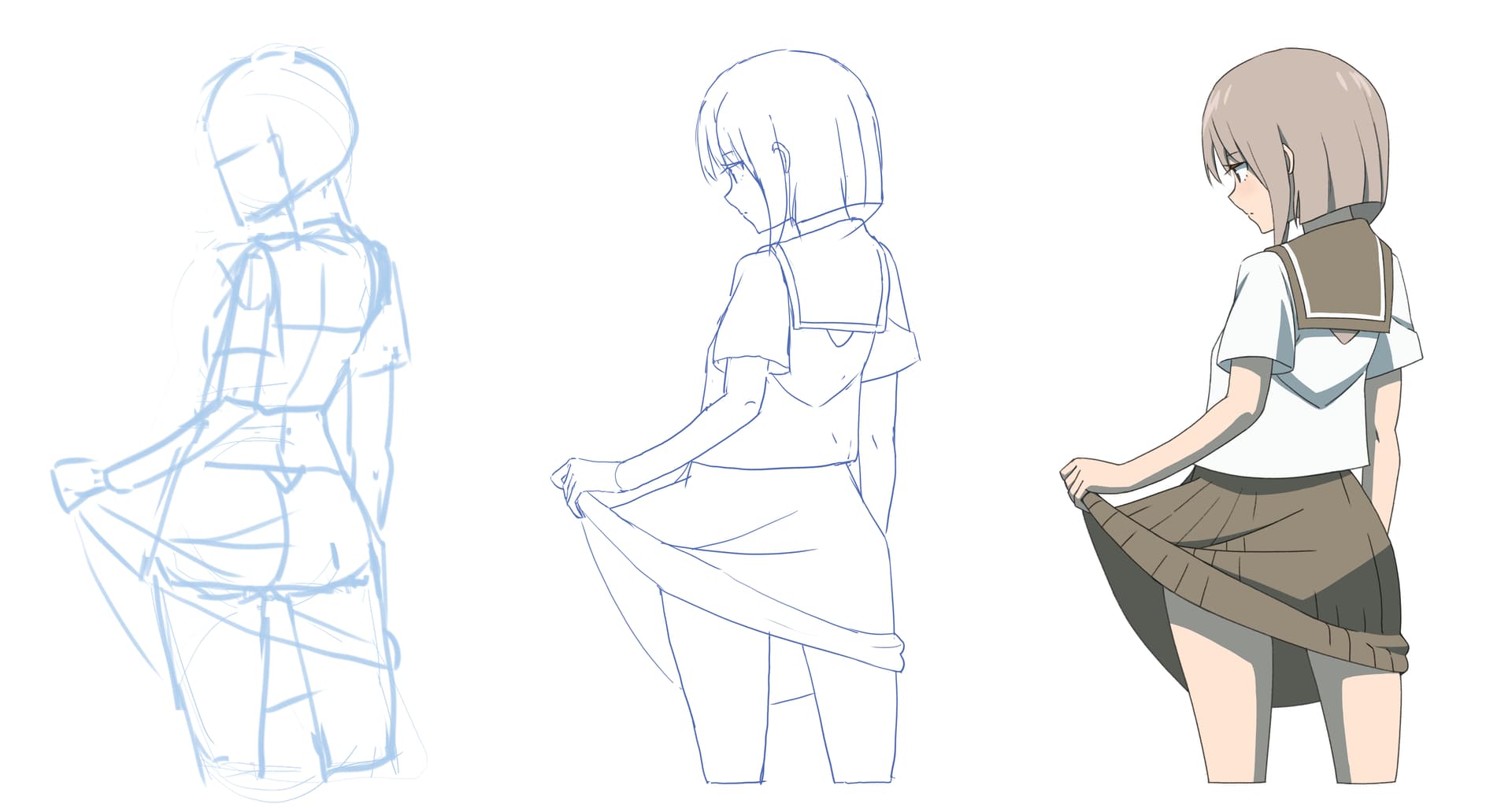
 This one is based on March live stream, if I recall correctly. I wanted to do some quick studies, but somehow ended up coloring it. I need to focus, and get a hang of more simple and focused studies, e.g. on the eyes, or the hair. Anyway…
 Time elapsed: 2 hours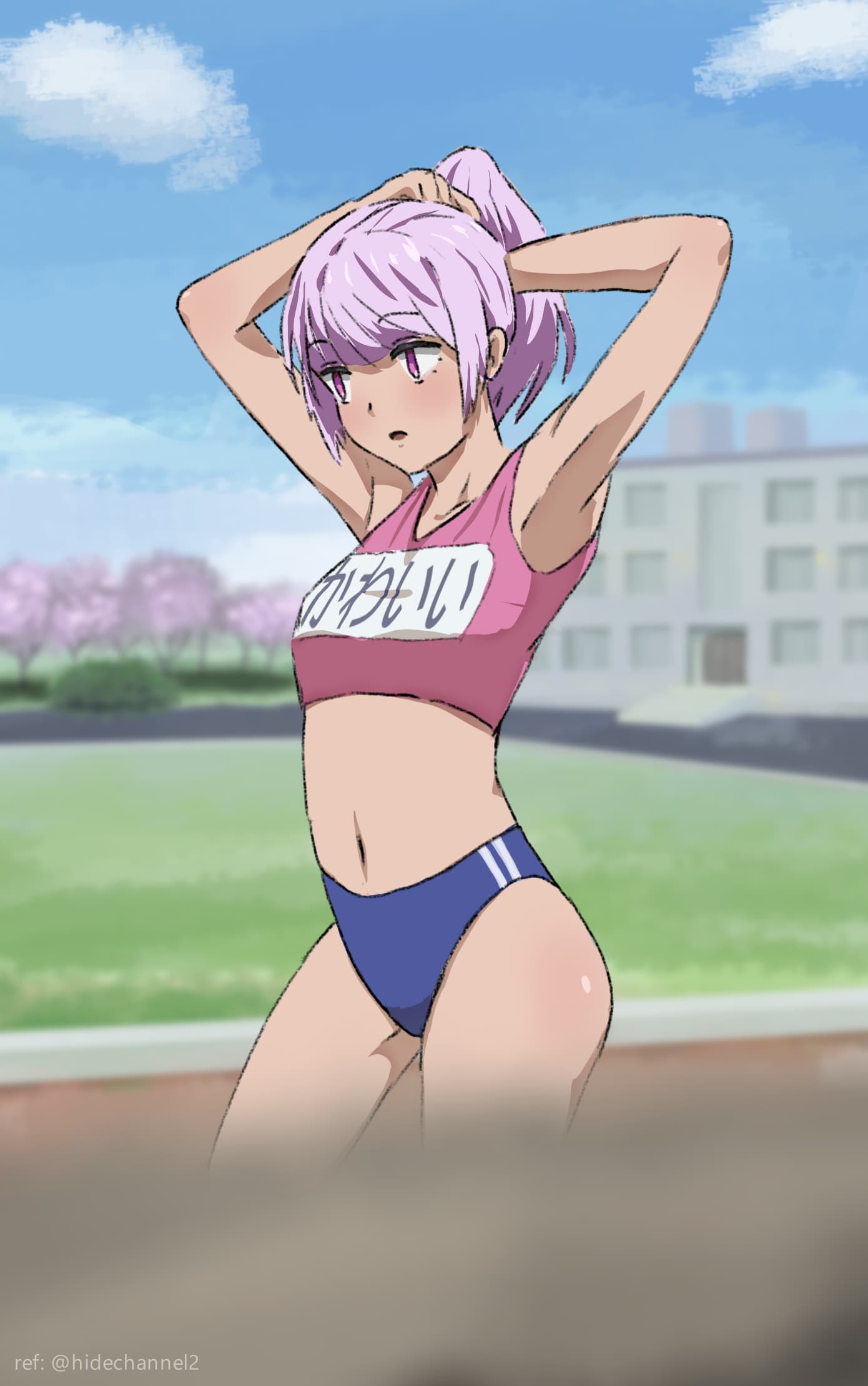

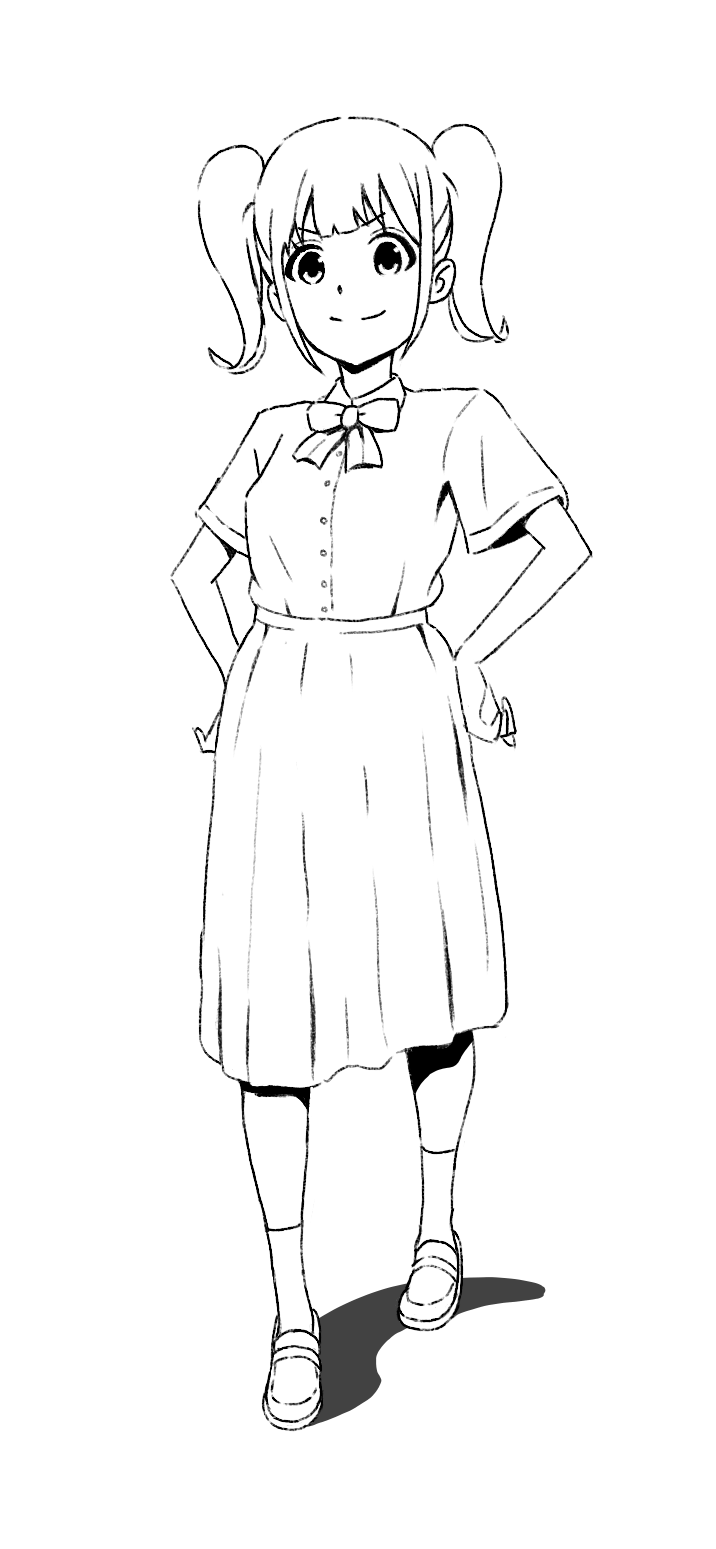
 (I fixed it, I think?)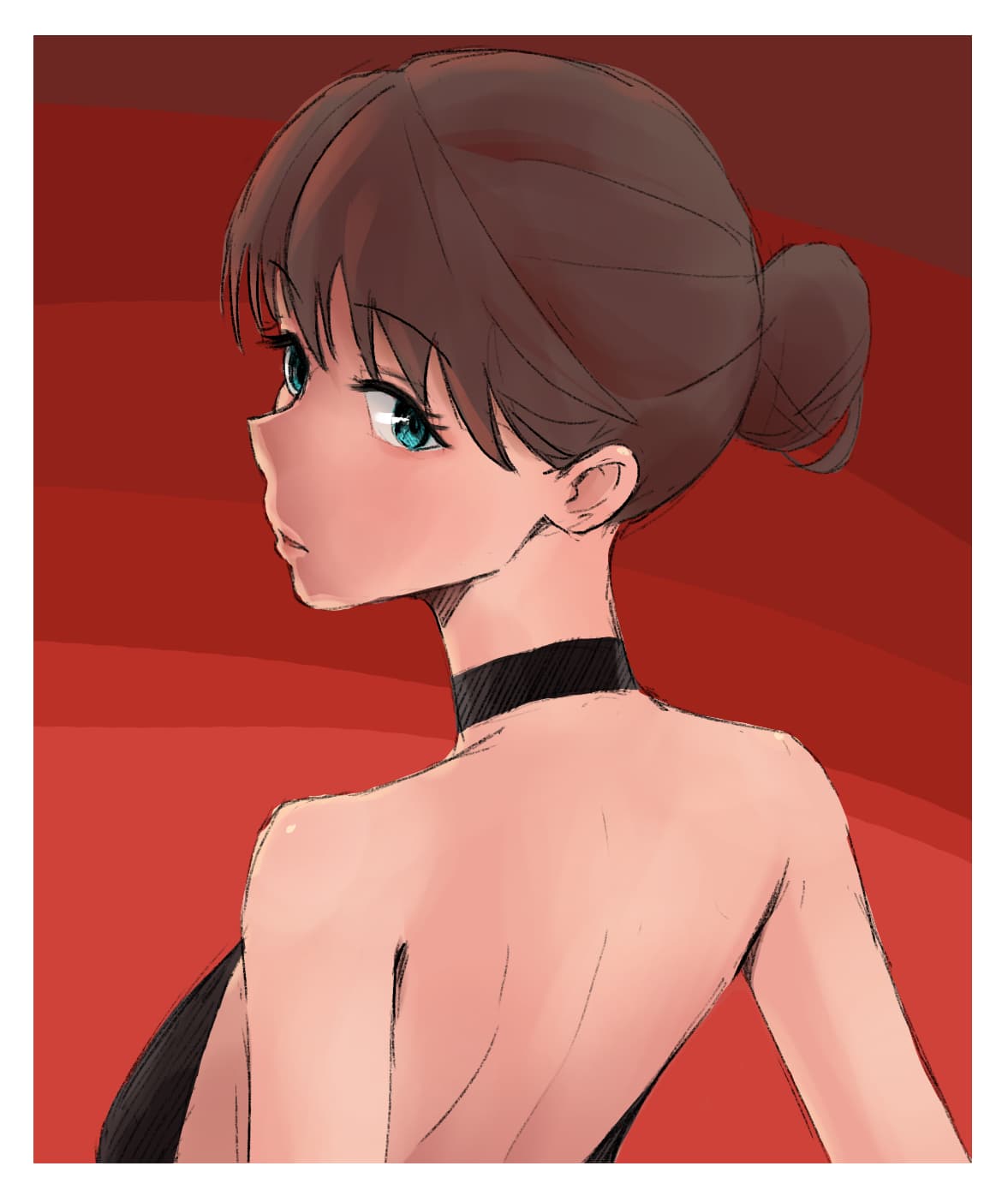
 (I feel like I said that recently and yet here we are, lol).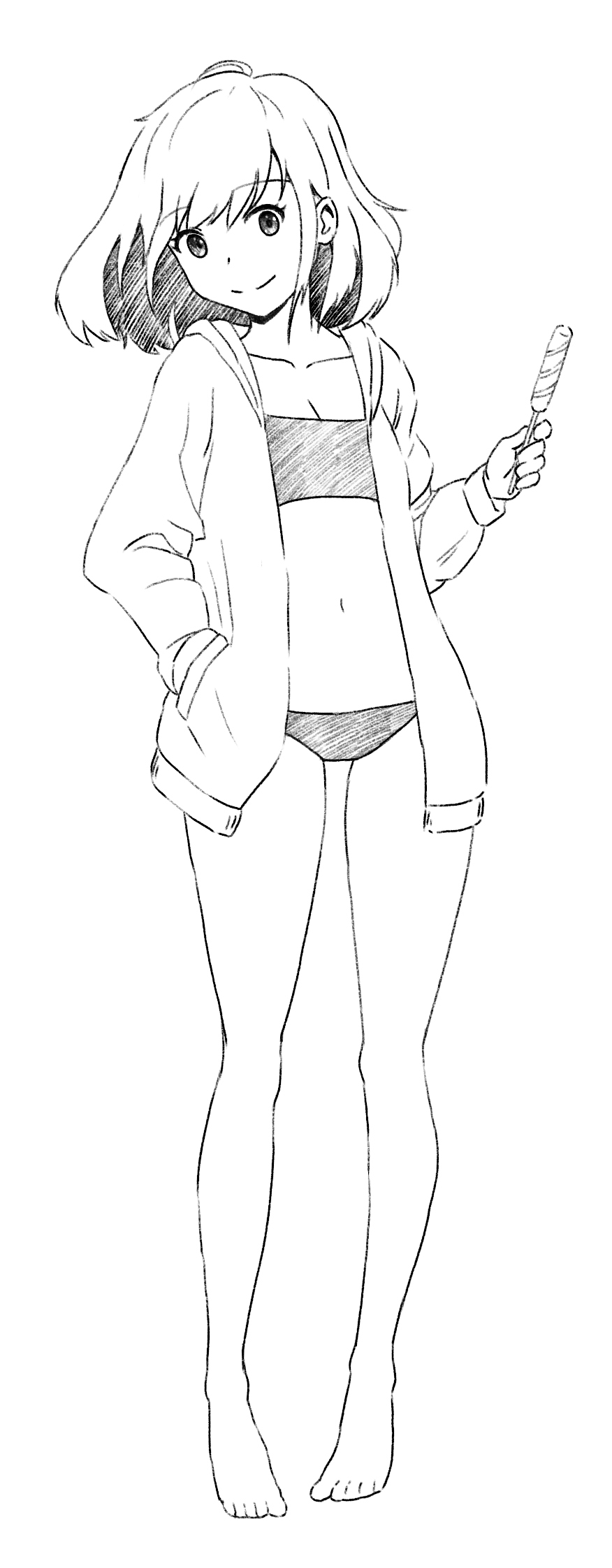

 But yeah, time will tell if I was able to put the advice to good use.


 Krita forum has been a great place to hang out and stay inspired, motivated, and be positive in general.