I am conflicted, if my paintings should be blended or not. This painting is not blended colors. I invite your opinion on this topic.

18 Likes
It depends on what style you’re going for.
Look carefully at your reference. What areas do you think should be blended and what areas do you think could be left as is?
I don’t think that I would blend the eyes but the forehead and check area could be lightly blended and maybe sections in the beard area. That’s my opinion.
Opinion noted, that is why I asked. Thanks
So there are lots of reasons for blending. One of the main is as a method of edge control. It is not the only one. For example, your piece already has a lost edge at the top of the head where the values between the skin and the background are almost the same. There are other places on the face where there are strong edges and a lot of contrast, and those make it difficult for my eyes to find a “main” area that you want me to look at. For example, could do you without the strong highlight on the ear? How about the highlight on the eye that’s in shadow? Would you want people to focus on his head and move down to his eye and then his mouth?
My advice would be to use edge control to draw attention where you want it and avoid spots all over the image that want attention. Whether you want to use blending to do it or something else is up to you.
1 Like
Thanks for your comment. What exactly do u mean by “edge control”?
blend is more natural but the men have caractere wihouth blend … its a dificult chose
sory for my bad english
Edge control is about the transition from one color+value to another. Some people may differentiate “soft edge” vs “lost edge”. the difference being how long the transition is.
Here’s an example using blending on one side, and on the other side there are shapes. When you zoom out you can see that hard edge very clearly. The soft edge still looks like an edge, but it’s a little blurry, and a lost edge is a transition from on to the other, but you don’t really know where the edge is.
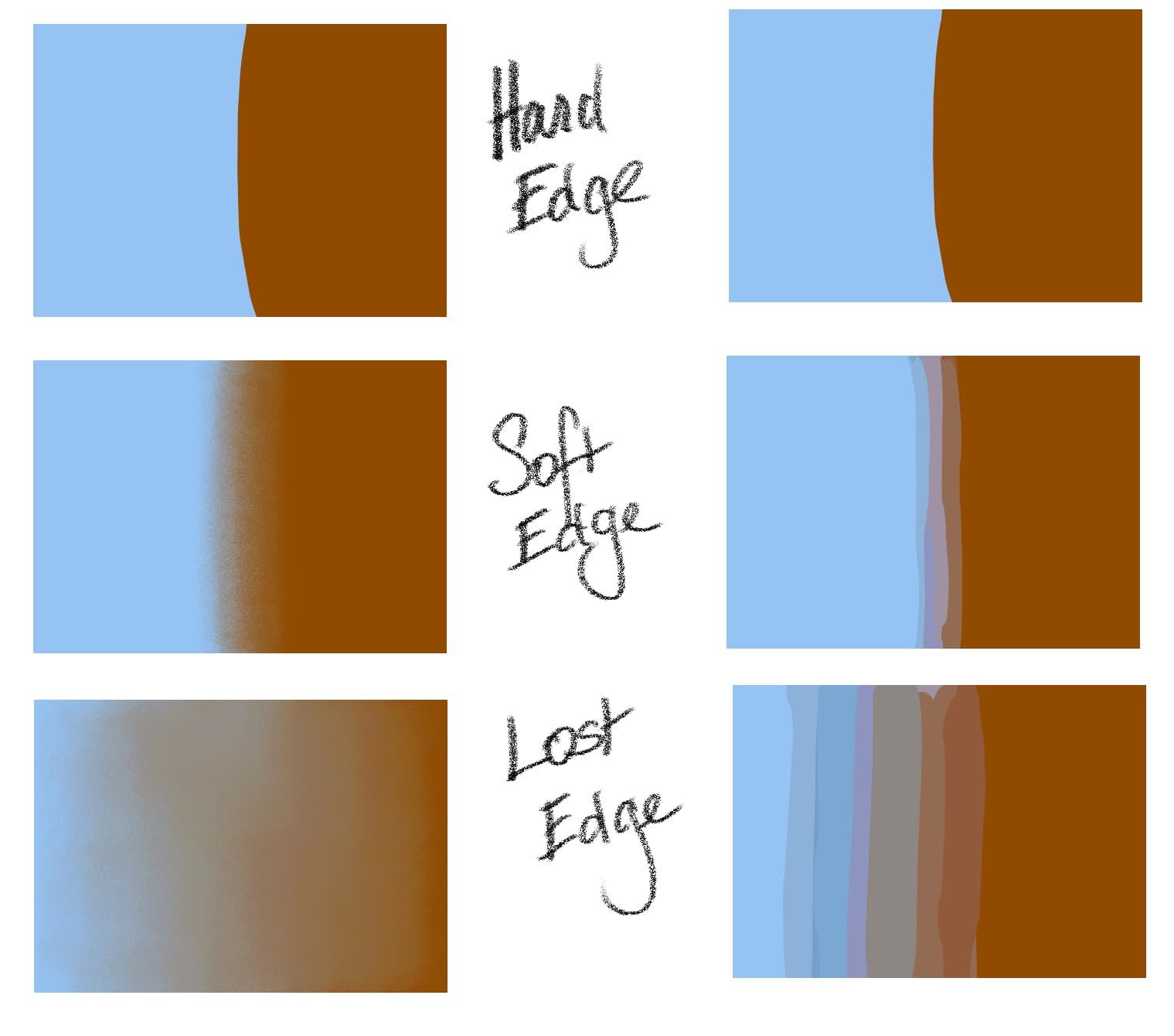
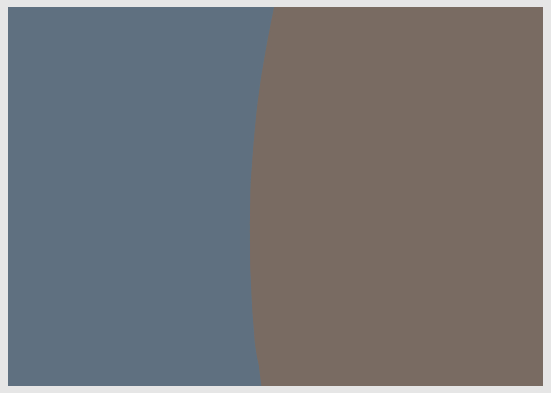
And it isn’t necessary to use many steps in between, it depends on what colors are involved in the transition. For example, colors that are more desaturated when placed next to each other start to blend into each other. you may notice that you have to focus your eyes directly on the edge to really see it well.
2 Likes
Just to be clear, you are doing these types of transitions in the image in many places - where values are similar but chroma/hue changes - this is how you’ve rendered the skin. You didn’t have to blend the shapes of color, the eye does that.
The places where you may want to blend are the transitions where the contrast between the 2 colors is very strong and it breaks up the overall flow of the face. But your style should dictate which technique you use.
1 Like
Thank you.
Thanks, you for your illustration and remarks.