Why people dont switch to Open source alternatives for creative works

Is this really true? This is what I found in their TOS

You will retain Your ownership rights to files, designs, models, data sets, images, documents or similar material created by You or Your Authorized Users and submitted or uploaded to any Offering by You or Your Authorized Users.

@Takiro You gotta look for it. They won’t say it up right

Including failure to pay any amounts owing with respect to any Offerings, Autodesk has the right, but not the obligation, to immediately disable or suspend Your access to and use of any Offerings and access to and use of Your Content. Unless Autodesk reasonably determines that immediate action is prudent, Autodesk will seek to notify You of the planned disabling or suspension before it takes effect.

Autodesk has the right to verify the installation of, access to, and use of any Offerings by You and Your Authorized Users. As part of any such verification, Autodesk or its authorized representative has the right, on 15 days’ prior notice, to inspect Your records, systems and facilities, including machine IDs, serial numbers, Autodesk IDs, and other related information, on Your premises using an Autodesk approved verification tool. In addition to Autodesk’s right to perform a verification on Your premises, You shall within 15 days of such verification request, provide a report to Autodesk using an Autodesk approved verification tool, that contains information relating to the installation of, access to, and use by You and Your Authorized Users of any Offerings including machine IDs, serial numbers, Autodesk IDs, and other related information. If Autodesk determines that Your installation of, access to, or use is not in conformity with these Terms (including any Additional Agreement, Special Terms or other applicable terms), You will immediately purchase new subscriptions to remedy the noncompliance, and pay Autodesk’s reasonable costs of the verification. Autodesk reserves the right to seek any other remedies available at law or in equity.

Your Content means (i) any files, designs, models, data sets, images, documents or similar material submitted or uploaded to any Offering by You or Your Authorized Users and (ii) Your specific output generated from the use of any Offering based on Your own raw data or information.

Usually all animation programs can’t export their content to another program just the output result of their work forcing things to be recreated on the other and things might look different after or not behave the same.

That is an important point. There is a ‘cost’ in workflows and comfort zone reduction when trying to change to any other software, no matter what the software is.
I used GIMP for many years and got used to its old fashioned inteface and clunkiness in certain areas, no problem.
When I ‘migrated’ to krita I had lots of frustration with some aspects of it.
However, I could clearly see the increased facilities and functionality so I stuck with it.

For some people, there is a perceived monetary ‘worth’ of that workflow change and loss of comfort zone and they compare that to any monetary cost of what they’re using at the moment. What they perceive may appear ‘irrational’ to you or to me but that’s how people are.

@Takiro makes a good point as a summary.

1 Like

Yup. People just want a free Photoshop. They don’t expect it to be different lol.

But I find them lazy sorry. They want to make it their job but not work on it… Lazy. The effort on the topic should be more than downloading a stupid brush you can’t use on other software. Flashbacks

But they don’t claim ownership of your creations you keep all your copyright. But I admit that’s not of any help when they can lock you out of the only software that can open the files whenever they want

Another thing I found in an Autodesk forum was that that they have an educational license which forbids you to publish your creation under any license that is not EDU.

You still own rights to your creation but most of the work is them. And certain things it is if you think about it. Your just a monkey that pressed the buttons they made, so if another monkey pressed them they would have the same results. And they have some stuff for graphical design that it is just that drag and drop and your a graphical designer.

To add to it they don’t own any rights in order of loss of data, or corruption or liability or to ensure industry standard or loss of revenue. And Maya breaks randomly after 2 or 5 saves. But if it comes down they own it more than you. That is why I love free formats and stability to save, but FBX is too strong still.

We are actually sponsoring Ramon Miranda to to a video every month.

2 Likes

Hi

Not related to Krita & Autodesk specifically but more to initial subject of this topic "Why people dont switch to Open source alternatives for creative works", here a simple example I have with my youngest sister…

My youngest sister (~19yo I could be her father :sweat_smile:) is a Tik-Tok addict.
All videos she make are made with Tik-Tok application installed on her iPhone.

Why to use this to made videos?
There’s some other available solution (Open Source or not).

But here that’s just the social network: locked by the social network that provide everything she need, she even don’t try to use anything else.
And even for some (hundreds) video she don’t want to put online, she use tik-tok.

She send me (and probably to her friends) some private video made with Tik-Tok.

And all these videos are stored on the iPhone, probably in a non open standard.

  • Remove application: all offline videos are lost.
  • Want to backup them? Seems to be not possible outside iPhone ecosystem.
    And even if possible, not sure that videos are stored in a standard video format.

And what happened few weeks ago?
Her iPhone was broken… not broken at the point it was not able to start it; just camera was not working anymore.
And the only things she told me when iPhone was sent back to repair was “I hope they’ll be able to save the offline videos”

After that, what now?
Nothing changed: she still use the Tik-Tok application for her video, and don’t even think to an alternate solution to made the video or to make backup of these important videos.

The problem here is not Open Source or not Open Source, she really don’t care about all of this; it’s more she currently have a free service on which she simply have visibility and “popularity”.

The same for office, she use google office tools because it’s a free service.
And not because the software functionality or because it’s the software that everyone use (or not).

Just a service is provided and she has nothing to do to use it.

And what about privacy with all of this?
She don’t care: when I try to talk about this, she laugh “lol they knows everything about me :slightly_smiling_face:

All that she want is a service easy to access and she can use easily to be visible on social networks… (and clearly, even if we can find free services based on Open Source software, as they don’t provide visibility and as you need an extra action to use it -compared to google service on which finally, once you have a gmail address, you don’t have anything more to use all of their services- most of people won’t use them…)

Grum999

2 Likes

Your sister is funny. I am surprised loosing her stuff did not phase her.

I was big on Google docs and the drive until I got my own personal cloud. Google docs is quite closed into having to be online to access content. After that I migrated into Libre Office.

The iPhone was broken, but still able to start.
So the device has been replaced by a new one ans they’ve been able to copy all data stored on phone…

So no data lost
Next time maybe :sweat_smile:
But you’re right, this event didn’t change anything on how she use applications and how to ensure durability and portability…

Grum999

1 Like

I literally had customers tell me “I didn’t make any backups because I didn’t need them yet”. Seriously, one of them lost almost 10 years of data and then later the year lost their data again (still no backup).

2 Likes

Krita Foundation does it, actually: https://www.youtube.com/channel/UCkIccKaHDGA8lYVmUerLhag - the channel is still small and there is only one video per month but the videos have reasonable quality and are educational. Ramon also made lots of brush packs which is actually something that other people commented Krita lacks; and those brush packs show how advanced Krita’s brush system is, which is good since it shows the advantage of Krita.

I guess for the 3d view? Yeah. I definitely agree. Especially if there was a way to make some very user-friendly ways to manipulate the content inside Krita. I have a dream that Krita could have what CSP has but it would kind of outsource all troublesome parts to Blender, so it could be more advanced with less cost.

Btw, regarding integration, I was thinking of a way to integrate Kdenlive with Krita nicely for animation. I’m going to write a new thread about it… I hope it will make sense and get some support.

2 Likes

Yes. there are many things that are connected but the 3d view would be a dream come true for me since I am heavy on 3D. But it is not urgent for me as I know some tricks that help me with it but are rather tedious.

As you heard before texture painting in 3D environments are all the rage nowadays with Substance Painter but it was bought by Adobe so me being me I will try and avoid it at all costs. but what Substance Painter does no one does. A 3D viewport would make Krita still a valid alternative to those. Photoshop has per example 3D layers and that was used before Substance Painter came in and are still a way to do things.

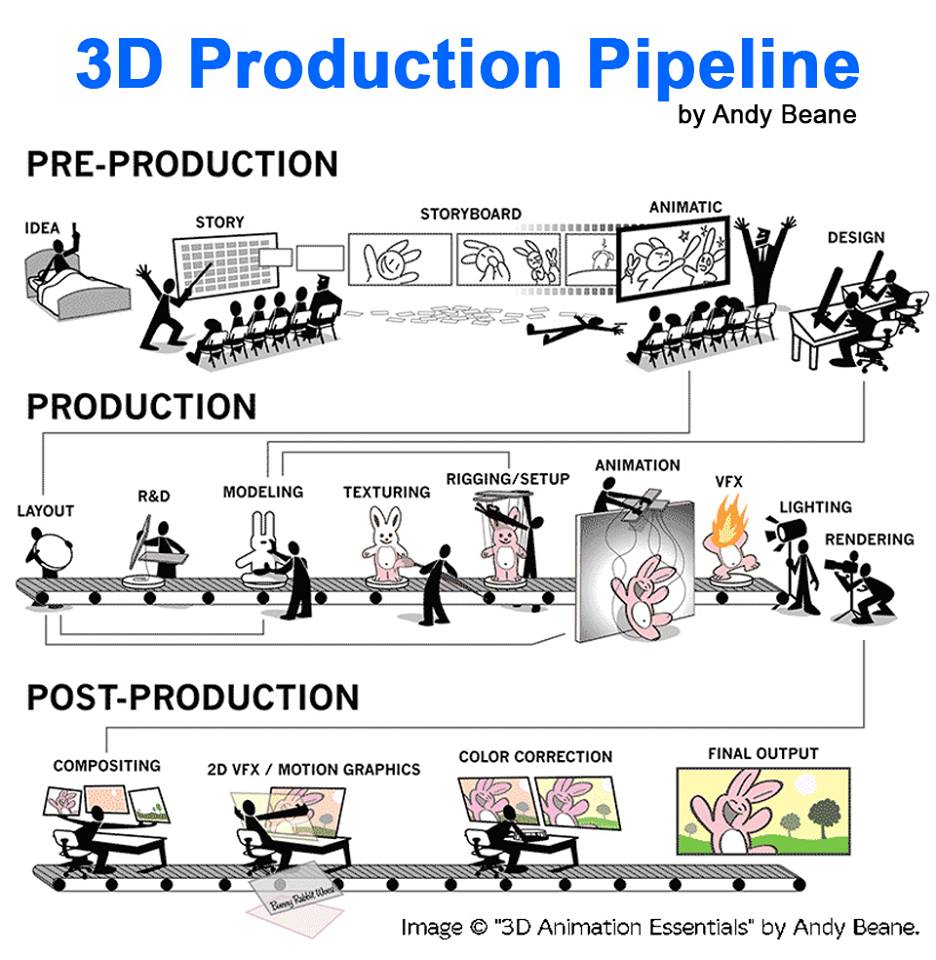
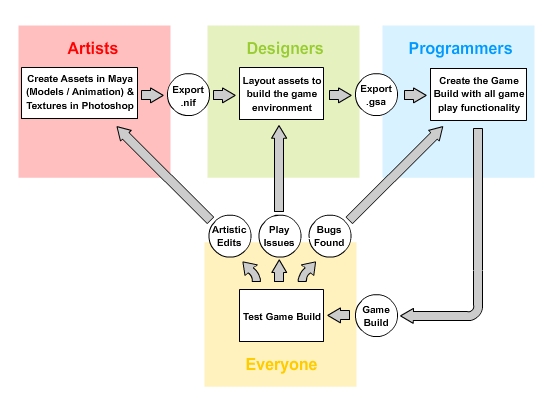
Pipeline wise they are all very similar considering how they work but how they connect influences your choice on your pipeline.

Looking at these graphs for example if you choose for modeling Zbrush, your pushed to select Photoshop almost by force. You can do it with Krita but your life will not be eased in because Zbrush does not support Krita the same way. You can load up PSD files into Zbrush and use them inside.

Zbrush is the God of 3D modeling and only this year Blender did a big blow to them. Zbrush has even come to copy Blender in some regards recently so that will be fun to watch how they will respond. But Blender is still bad on performance on heavy scenes and will probably be hard to solve that because Zbrush is not 3D but literally 2.5D. But Blender has Eevee now and Zbrush is focusing on non Photo realistic renderings so Blender does not need Keyshot like Zbrush does.

1 Like

from googletranslate:

There is an artist website called “pixiv” in Japan. Viewing pictures by popularity requires VIP. Then you can get a “CLIP STUDIO PAINT DEBUT”.

This reminds me of many local mobile painting software (with fingers). Last October, a software was taken off the shelves because of policy issues. The user’s painting cannot be extracted. But they still plan to use a similar product. For them, what really matters is not artistic creation, but the social platform built into the software

Making some form of bridge or integration between Blender and Krita could be really wise. But the problem might be to want too much too fast. I work professionally with ZBrush and Blender in my agency job, Blender really got so much better performance wise and will only have more power in the future (speaking of the viewport especially, like EyeOdin stated above). For most things, you can totally export ZBrush stuff over to Blender, as long as you’re not using more than a few hundred thousand polygons. And frankly, most of the time you don’t need millions of polygons. Of course more is always good.

A really good start and low hanging fruit could be synchronized texture maps. I imagine painting a UV unwrapped character and having multiple layers of the Blender material as Krita layers in one file.

Or not even thinking about Blender only, being able to load any 3d model (obj, alembic, or whatever format from whatever 3d software) and having a simple 3D viewer window in Krita. And talking about Open Source, there might be a chance that you could join forces with Blender, Godot and especially Armorpaint (also by the devs of Godot). https://armorpaint.org/

Also, a Blender <> Krita exchange in the .kra or .ora format. That might actually be the lowest hanging fruit and also one of the best things to get even more people to use Krita. Multilayered EXR is available, so I imagine only the formats are missing in Blender, the export can be set up in the compositor of Blender. EXR with 16 or even 32bit could be overkill for Krita paintings.

Obviously I’m just going completely crazy here, it might be totally off the charts. But over the years I thought why not join forces between multiple FOSS projects. I can only imagine how great this could be.

Edit: I just tried it and Krita loads Multilayered EXRs, as usual, I’m blown away!

2 Likes

I think the original question by itself is kinda wrong. Because people don’t make choices between commercial softwares and open source-free softwares in the first place. Actually people don’t give a shit about that categories as far as I’m concerned. :neutral_face: I’ve seen many users using both open source softwares and commercial softwares(generally commercial ones by ratio).

It’s not like people are actively avoiding ‘open source alternatives’, so the better question that should be asked would be something like ‘How to attract more people to Krita’, which basically applies to every software developers whether you are open source developers or commercial software developers.

CSP is growing fast as a competitor to photoshop, and while I’m 99% sure that it’s going to take over the art industry in the future, I expect the same for Blender too. They are doing great jusy by their own.

Now, I’m aware that Krita devs are doing their best on a very tiny budget(Hopefully my donation is helping), and I cannot tell you enough how greatful I am to have this amazing software, but I don’t like to frame this issue as something like: ‘Why don’t people use open source softwares!?’, because that only seems unproductive. That category doesn’t even exist in the most people’s head.

1 Like

That’s not true. Open Source software is more widespread among users now (compared to 15 years ago or so) but there is still a preference for commercial software at least in businesses. I work in software development for many years and in IT in general too and bosses would often prefer a closed source commercial software over a open source softwware. The reasons have been mentioned here before but its usually because its seen as unreliable (what if maintainer decides to stop some day), they bad experiences in the past, slow development cycle (updates and releases take forever), license restrictions or even simply the fact that companies want someone who they can sue if something breaks. No joke, I have seen companies chose a inferior proprietary software just because they want to have someone who they can send their legal team after.

Normal users usually don’t care much, that’s true. They take what gives the best for their bucks but we shouldn’t ignore that it’s mostly companies that drive development even for OSS, Blender is the best example.

We should not forget that Microsoft CEO Steve Ballmer called Open Source the cancer of intellectual property and MS run a long going FUD campaign against Linux and OSS that cemented a lot of prejudice which people still believe to be true. Luckily these beliefs die out as old executives and managers get replaced by younger ones or at least people with open minds.

1 Like

That’s true, people don’t care whether the code is open or not… BUT

  • they do care if they have access to their content. Both DRM and cloud-only options are treated at best as “necessary evil” (I mean cloud is good for other reasons, but cloud-only has lots of disadvantages). In libre software there is no point in implementing anti-features if anyone can step in and remove them, and, I mean, if software is libre because of ideology (I have seen some software that was libre for different reasons, mostly “so you can learn from the code” etc.), then implementing anti-features would be against one’s principles
  • they do care if they can suggest changes (which, sure, is possible with closed-source software as well)
  • some might care if they can take the software and make changes, possibly with others
  • they do care if the software format is open (vide Scribus, also Krita’s .kra recovery process)
  • they do care if they can access the previous versions of the software, because the latest has some annoying bug or crash or whatever
  • they do care if they can try the software before paying for it (lots of software has trials, sure - but there are some with more reasonable and user-friendly ones, and there are some that are not really… I believe Black Ink had like 2 hours of trial? In some programs you cannot access some functionality, so you cannot test it before buying… on the other hand there are those like Artrage that allows you to use everything, but only saves the picture in low resolution, and there is no time limit)
  • they do care whether they can easily move the license between their old and new workstation or maybe they have to do some weird black magic (which is not a problem with libre software)
  • they do care if they can install the software on all of their devices or if they have to buy license for every single one of them (again not a problem)
  • studios might care whether the software can implement a feature they need, or allow them to pay someone to implement a feature they need; Blender Institute wanted Mesh Transform, for example, so Dmitry implemented it, while some Dutch VFX studios wanted to use Krita with Python 2, so they just submitted some patches to make it possible to build with Python 2. The first option could be available with closed source studio, but the second wouldn’t be, right? Unless they would buy a source license or something…

For now that’s all I remember, but there might be more. I’ll try to edit this post if I recall something else :slight_smile:

2 Likes

I’d like to donate to Krita because I use it a lot. I’d want my donation to support the programmers/developers however first and foremost because they’re the ones I want to support. I’d be disappointed if my financial support would go to promotional video.

I’m wondering if, as a donator, it’s something we have an agency about? I’m not aware of how funds are managed when it comes to projects like Krita. Is it like company where once a donation is made whoever is in charge how ressources are assigned?

On one hand, I’d get that it might get hard to manage if “investors” (for lack of a better word) get to have a say how the support is handled. But on the other hand it would seem in accordance with the idea of being community supported. I mean, I like the idea of it.

Is it possible to contribute to the programmers individually. Since I want to support the development of Krita, I’d want to support the people who work on Krita as a top priority. I’d be in disagreement with supporting peripheral activities (such as video promotions). Don’t get me wrong, I’m not saying it’s not important but to me it’s not as important as the people who work on the software. They’re the ones I want to support.

Not sure if it’s off topic but I wanted to ask about this. It’s a bit delicate but I figured it’d be a good thing to know.

The videos are mostly tutorials and not just simple ads. He also creates new brush presets and packs. its like saying the money should go to programming but not to writing the manual when that is actually a integral part of the product too. Software projects are more than just programming and there is a lot of work involved on many parts, everyone deserves to get paid.

4 Likes