@MangooSalade  tried to make something that is easier to explain but the result not the best.
Use ref and take your time during practice. Trying to draw natural object with limited visual memory make it look not good, like what I did here is not the best.
- Why I think brush edges important is because it determined the process used for the illustration. For example in the Flat color blocking/Silhoutte technique, Hard edge brush is used at the start. This is often used by environment artist (based on my observation of their timelapses and demo video). They use it to determine the shape of the object first and also to create perimeter/outline for that object. More importantly knowing the right edges/border of a plane surface is crucial in blending when shading a shape.
Flat color blocking at the start.
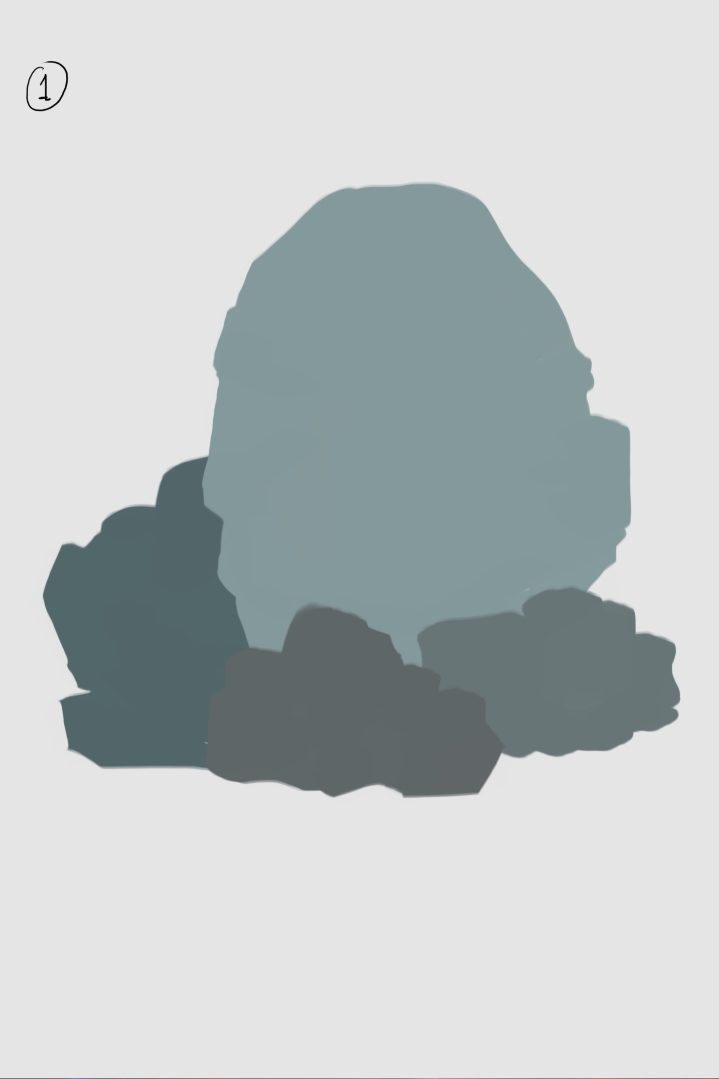
- Because you already establish the silhouette/outer border of the object, you can just lock the layer alpha and draw the base separation of the light and dark part in said object.
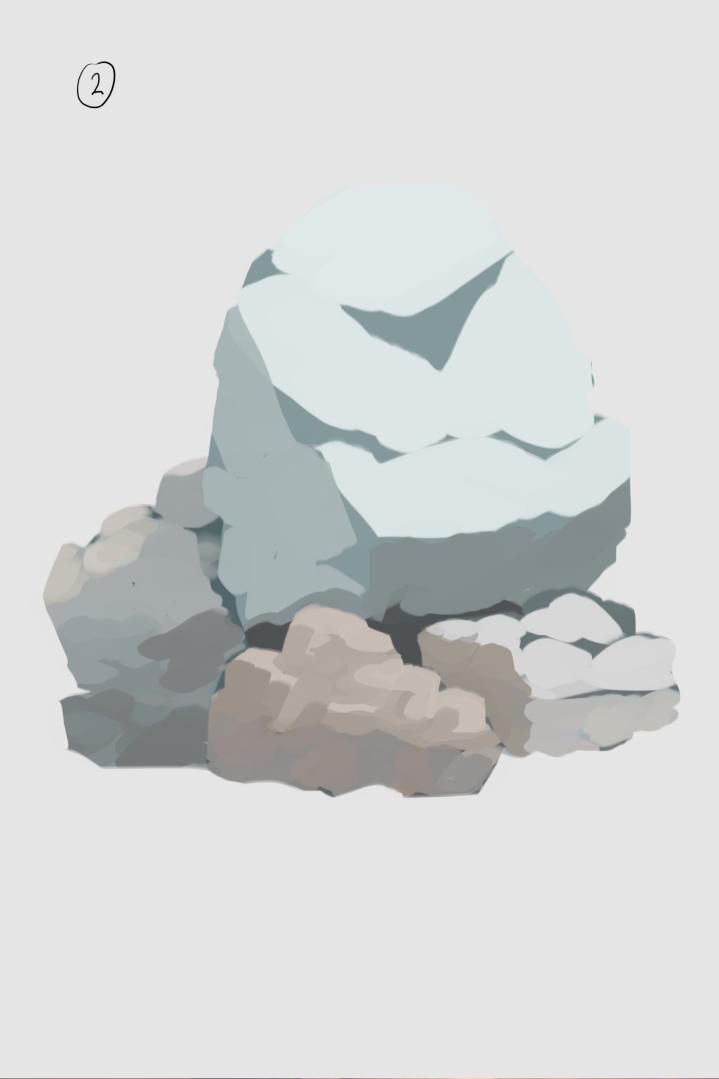
- The picture below don’t really represent why it is needed to stack texture, but imagine having a long grass texture and a short grass texture. The short grass is used to mask the long grass non existent root area because the long grass brush don’t include its bottom part. How do I say this… basically to create organic look when there is 2 or more object surface meet sometimes you have to obscure it by having 1 texture in front of the other.
For the picture below where the 2 object meet are between the rock and the ground, I have to draw the right shadow to make the rock looks properly seated. but you can also mask the bottom of the rock with grass but then you have to think about the right way to make the ground and the grass blend well.
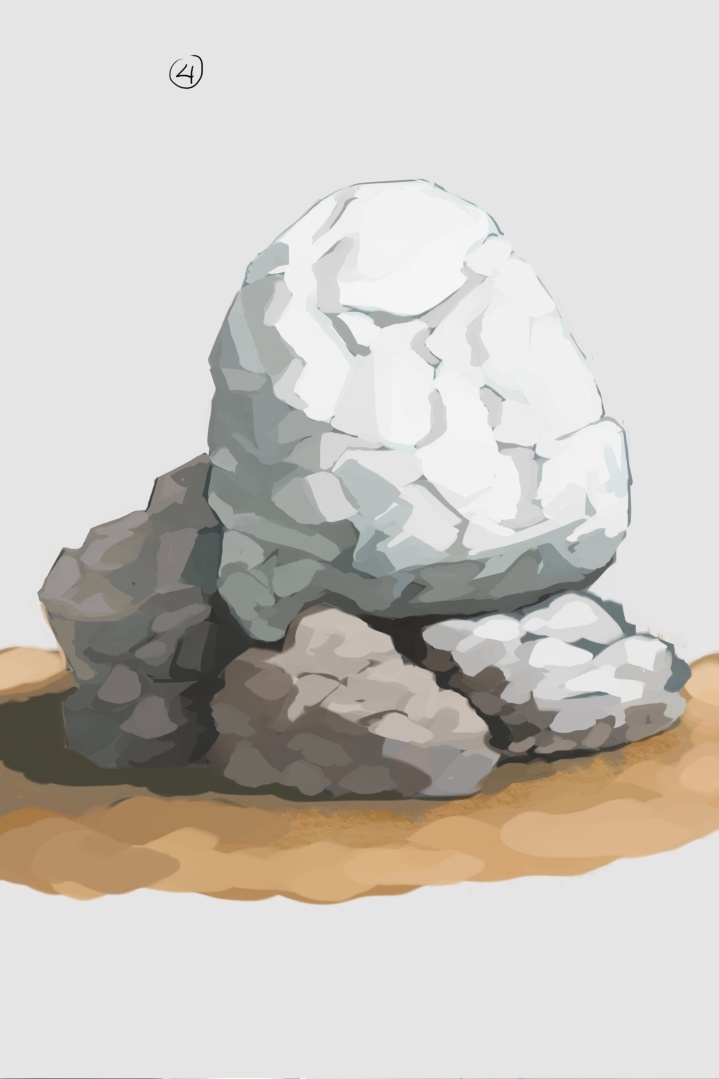
- The intruding and extruding texture, is a way to blend texture shape in organic object better. Since the crack in a rock is somewhat random or leaves in bushes don’t have fix pattern (There’s slight variation), you can first just create simple flat shapes with variety of values according to the light source placement, but then use the value in one shape to intrude into other shape and create that more organic looking surface texture.
I can’t really explain it in better way. But I am sure there’s someone out there that create a video demo for drawing texture for something like rock or bushes that touch on this matter. Breaking monotone pattern.
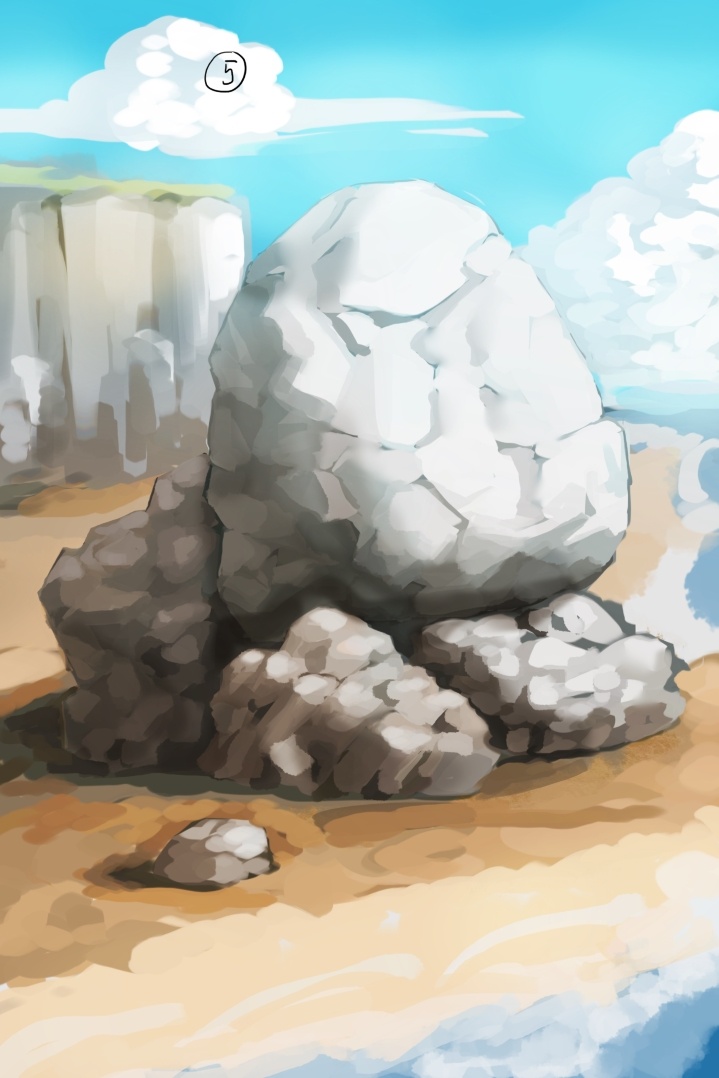
Last tips if you are like me that maybe don’t have much money left after spending on the day to day stuff. If you tried to learn something specific from other artists, try to gather multiple articles, timelapses, demo, explanations etc that touch on the same/similar subject. 100% there will be pattern/silver lining, at least in the concept, mindset/way of thinking/way to problem solve, techniques, process steps, etc. You will get at least one of those and even if It is rarely be specific info or rarely answer your question immediately but at the very least the info you get will give you some hint what to search next.
Lots of effort and time spent unfortunately, but that’s the trade off when you don’t have enough resource.
Usually when there is enough question that pile up and I know what the answer in general but need a better explanation or more in depth knowledge I try to find a book. Starting with the free old/ancient books lol. Even if you have to buy, I think buying books is better since there’s arguably more content and more importantly the info packed in a more coherent manner.
Sorry if my sentence is hard to understand and long, I am not a native English speaker. I tried to answer several stuff that people post here and some from my dm.