What's the best single piece of art advice you got and why?

I’ve gotten some sage advise, and cr*p commentary over the years, some of it actually changed my perspective on art. My best piece of advice came from an instructor and prolific artist who has worked masterfully in oil painting, monotype, lithography, etching, pen and ink, watercolor, etc. I asked him how he got over his initial hurdles with new styles and media and his reply was:

“You know you’re gonna throw the first hundred away anyways.”

I Thought he was being a smart-ass but he was serious. I figured since he had work hanging in several prestigious galleries and made a good enough living off his work to build 2 houses and put 3 kids through college, maybe it was worth considering his input :wink:

At first my brain was spinning doing the math on what a hundred wasted oil paintings or drawings would cost me. Then, over time, I got to realizing how freeing that is for an anal retentive, perfectionist such as myself. It freed my brain from stressing on details or needing to do everything perfect the first time and allowed me to do more work in a shorter period. It taught me to value the process and not get attached to the output.

I know that approach doesn’t work for everyone, but for me it was transformational for my mindset and work.

I’m interested in hearing the best piece of advice you’ve received and why you think it is :grinning:

7 Likes

I’ll keep mine short: “I fear not the man who has practiced 10,000 kicks once, but I fear the man who has practiced one kick 10,000 times.” (Bruce Lee).

I love talking about this kind of stuff when it comes to learning art.

10 Likes

Practice, Practice, Practice.

7 Likes

I would say try and push yourself to paint even when you don’t feel like it.
Try Not to Not draw when you feel inspired and creative.

Have a rested brain to work (good sleep schedule), because while art shouldn’t be purely work, it should also be satisfying and enjoyable. There nevertheless is a work element to it. And sometimes real life chores/job will make you not want to work. So I would say find balance and know how and when to set aside time to practice/be creative

Also try and work on some pieces that speak to you

6 Likes

I saw a video where the late and great Kim Jung Gi mentioned that he not only draws A LOT, but when he’s not drawing, he’s looking around and thinking about how he would go about drawing what he sees. What I took from that is that since drawing is largely about knowledge, you shouldn’t think that you’re sharpening your art skills only when you’re holding a tool and in some discrete “art mode” and looking at references, but rather you should be open and thinking about how to make your observations improve your drawing all the time. It’s like how learning in general doesn’t start nor stop at school; it’s a continuous process.

5 Likes

I don’t know how to translate it in English well, but it goes something along this line, “Drawing is a trained skill not studied skill.” - My friend, years ago when I tried to hoard tut videos and articles.

4 Likes

You don’t think it’s both?

1 Like

I think it is both too, but my friend was right to say that to make me not hoard something that more or less has many overlapping lesson. Since what I need is just basic fundamental knowledge and a lot of practice.

In my opinion studying for additional knowledge improve efficiency, but for effectiveness, fundamentals is where it is at. Art fundamentals is easier to understand and not much if compared to science subject but hard to implement without a lot of practice.

I think previous comment that quotes Bruce lee makes sense, since learning how to draw is somewhat similar to learning martial arts. :grin:

3 Likes

For me it’s “Painting is an act of expressing what moves you.”
This quote is from a Japanese artist. My understanding is that painting is not only about drawing the shape of something, but also about expressing a theme, an emotion, or simply your own taste. Meanwhile, what can move you will also give you the motivation to paint. For example, seeing the vibrant green leaves in the sunlight.
I simply didn’t realize this before, so my paintings all looked boring, even though I was continuously learning painting techniques.

1 Like

It’s better that our training is guided by wisdom. Regardless of what it is that we do or study, we need wisdom. Life tells us this. We entered this world helpless and needed the wisdom of our parents. The same is true of art. Without the wisdom and insight of those that went before us, much of our training will be aimless. This is why I focus on wisdom and insight and the MIND because they’re rare to come by. Academic knowledge are abundant but wisdom… that’s something else.

I think it is both too, but my friend was right to say that to make me not hoard something that more or less has many overlapping lesson. Since what I need is just basic fundamental knowledge and a lot of practice.

That is the key. Here’s an excerpt from the manual I’m working to put together:

What I’m about to share and present here are nothing new. In fact, Solomon would have agreed, “History merely repeats itself. It has all been done before. Nothing under the sun is truly new. Sometimes people say, ‘Here is something new!’ But actually it is old; nothing is ever truly new.” (Ecclesiastes 1:9-10). At this point in history, nothing in art is new. However, what is new is how old concepts and principles are taught and the way they’re organized and presented. The thing with books is that there are countless art books out there. On this, Solomon would advise us to “Be careful, for writing books is endless, and much study wears you out.” (Ecclesiastes 12:12). As a self-taught artist I have wasted much money over the years buying books and I can say that it’s the same old concepts and principles recycled and re-interpreted. Truly, there is nothing new under the sun, and the manual that you’re reading right now is no exception.

Many beginner artists have been wearied out, searching for that hidden secret knowledge. Last night I wrote a post to respond to a thread on here to guide a beginner artist but changed my mind and didn’t post it and wasn’t planning on posting it, but it seems to be more appropriate to post it here since Bruce Lee was brought up again. Post Begins:

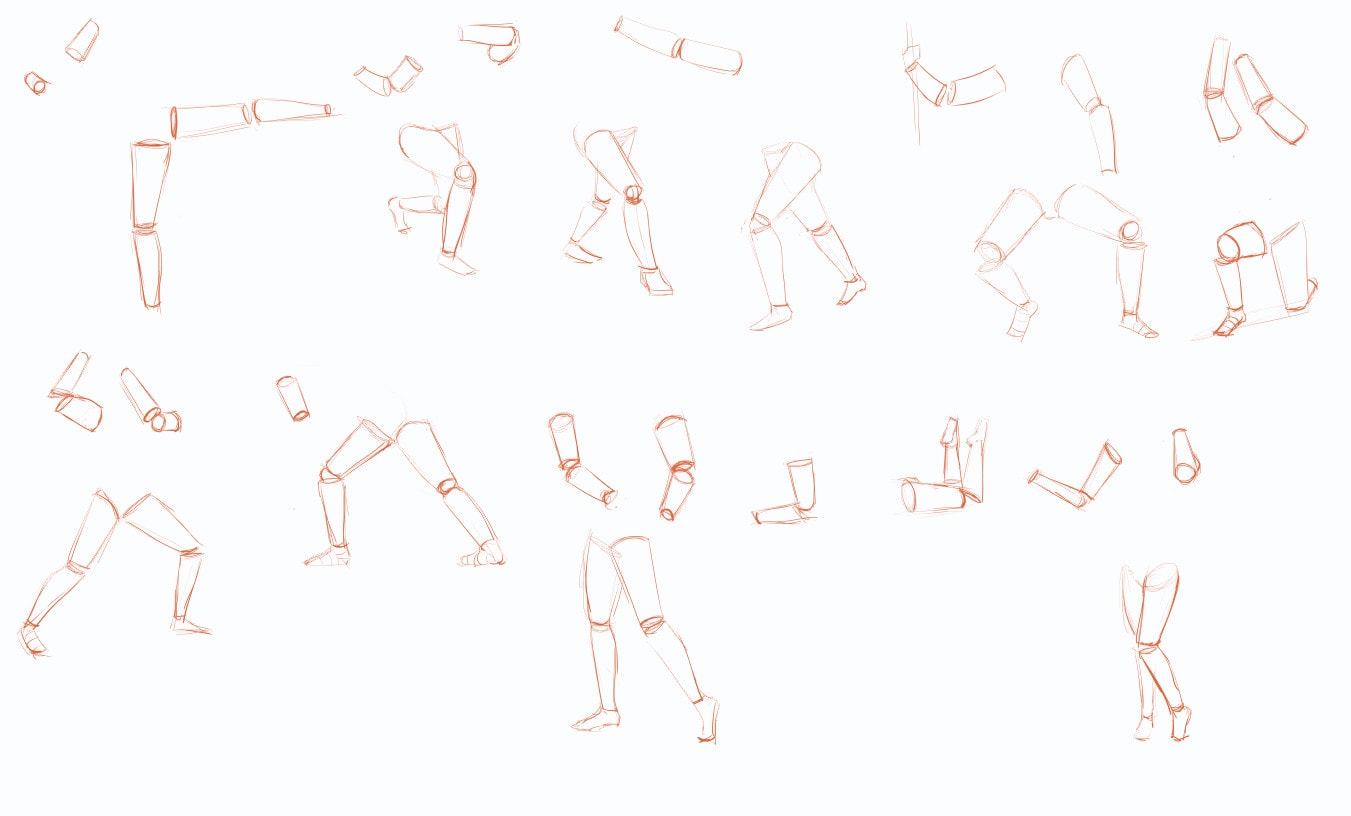
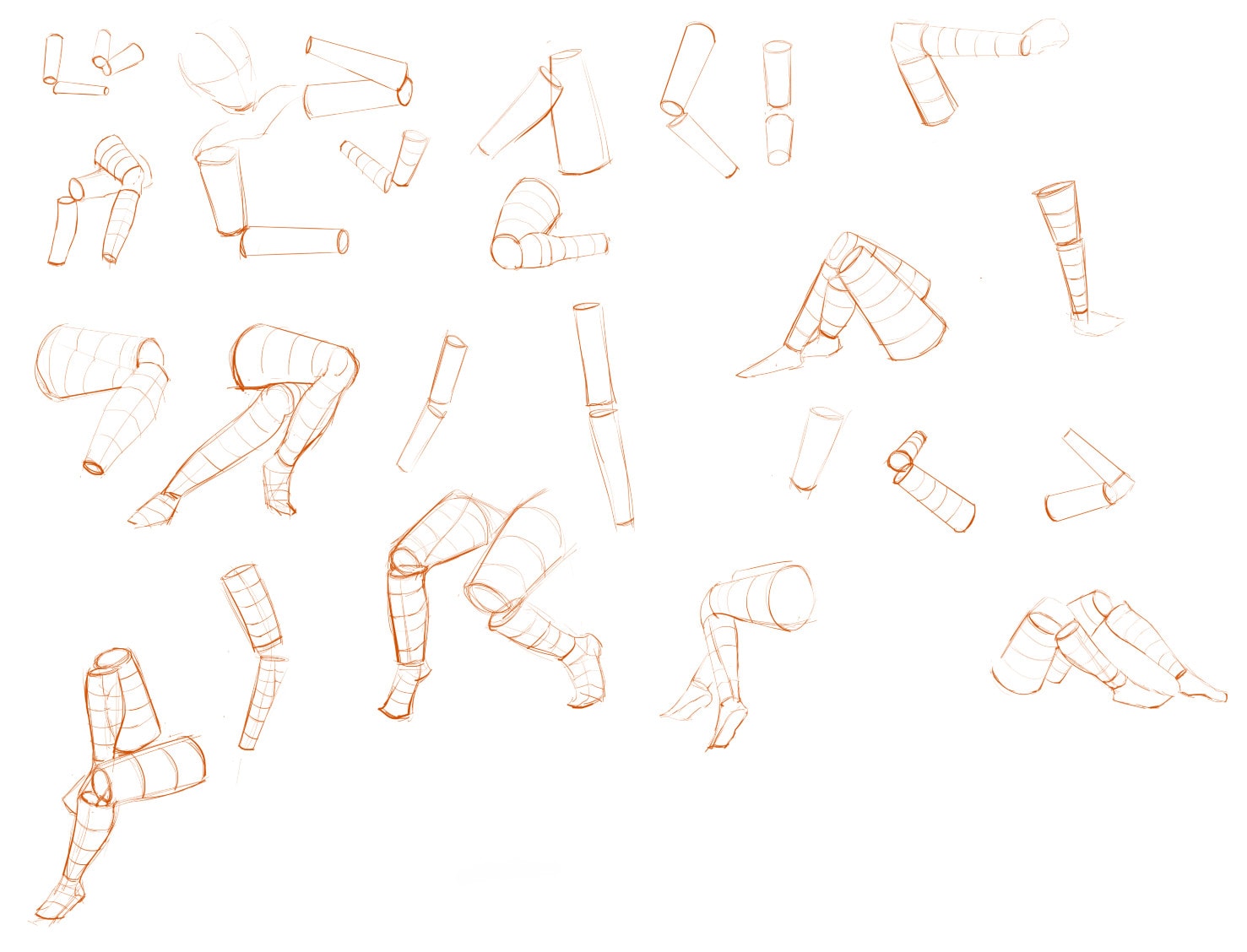
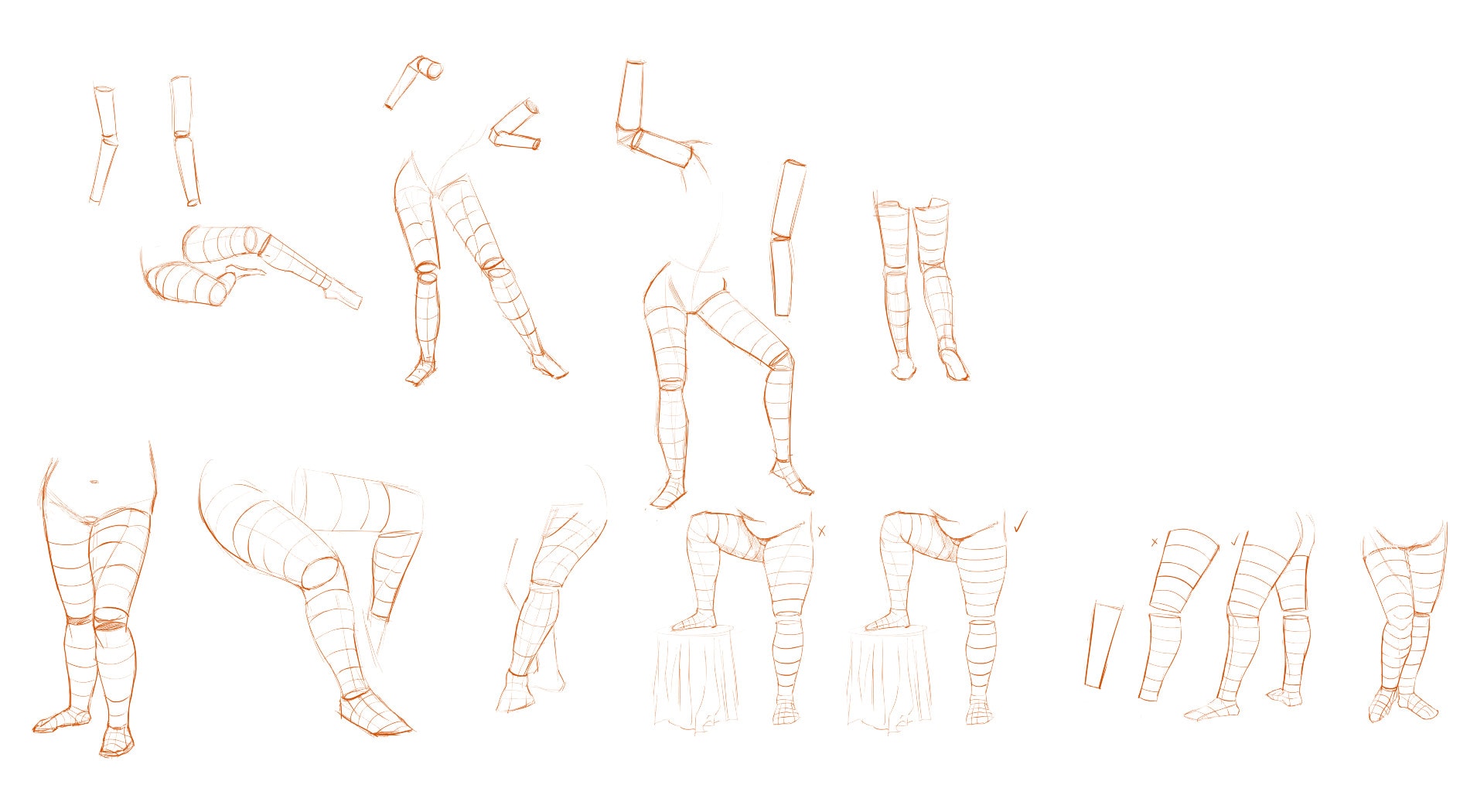
When you sit down to create a piece of art, there are a lot of things that go through the mind of an artist, such as: Lighting, Color, Proportion, Anatomy, Edge, Composition etc… These things can all happen at once in the mind, or at least, the mind of an artist processes these things very quickly through years of experience. But when you’re learning or starting out, it’s best to tackle each one individually. For example, let’s say you’re struggling with proportion. Spend some time just exploring proportion until you have a better grasp of it. You will learn much quicker without discouraging yourself in the process. Trying to learn and accomplish everything at once will discourage you because doing all these things at once is what you do when you sit down to make an art piece, but not when you’re learning. You have to be strategic in your learning. Bruce Lee once said, “I fear not the man who has practiced 10,000 kicks once, but I fear the man who has practiced one kick 10,000 times.” Take whatever it is that you’re struggling with and practice it 10,000 times! 10,000 is an exaggeration to make a point. I believe that’s the best art advice you’ll ever hear coming from a master martial artist. Back in 2019, I aimed to draw 300 pair of cylinders. Life happened and I couldn’t reach the 300 target, but managed to get around 150. Keep doing it and your mind will develop and discover things.

Here are some samples. I started off very basic. Then decided to use references. This means 300 poses since that was my target. Slowly I grew in confident. If you were to do this same exercise, you can do three or five poses per day. You don’t have to do this same exercise but I’m using this as an example to prove Bruce Lee’s point. If you repeatedly do the same thing over again and again, you will become dangerous in that one thing.

It might seems like you’re behind if all you do is just practice drawing the Sphere, Cube and Cylinder but these three will help you to draw both what you see and from imagination. Even when it comes to lighting and color, these three will be your friends and guides. I didn’t know how important these three are until I entered my late 30s. When it dawned on me that the mind can’t draw what is complicated that it has to simplify and break what the mind sees down into bits and pieces that it can understand and process, that’s when I saw the importance of the Sphere, Cube and Cylinder. Drawing the human head is hard! But drawing the Sphere and Cube is easy! Lighting the head is hard, but lighting the Sphere and Cube is easy! The trick is to trick the mind into seeing the head as sphere and cube. It’s all about simplification. If there are secrets to art, then the Sphere, Cube and Cylinder would be one of the secrets. We learn and do by simplification and divide and conquer.

Post Ends.

In the manual, I called that The Ten-Thousand Kicks Mindset. There is really no great secret. The difference between a professional artist and a beginner is that the professional has mastered the fundamentals or has a good grasp of it.

3 Likes

Words from Ms Nancy, one of my college drawing instructors, “You can keep drawing in that very realistic style, and I can see you becoming very good at it, so much that your work looks just like a photograph. Or - you can just take beautiful photographs with your camera, and LOOSEN UP and HAVE FUN drawing again, like you did when you were five years old.”

6 Likes

I’ve heard a similar thing from an arts teacher. If you strive for perfect photo realism,why not take a photograph?

That helped me to aim for my art to become something else, and not photo realism. Art can be so much more.

2 Likes

A post was split to a new topic: I need some suggestions and insights

Around 2007, I learned a lot thanks to the answer of an advanced users named CodeNothing on a DailySketch thread (CGtalk forum). I’ll share it here with you because I think it is the right place.

HI! you asked about quick sketching,

I suggest trying to limit yourself to 3 values: Dark, Midtone, Highlight.
and for a long time limit yourself to Black and white or Monochromatic color schemes.

Force yourself to sit down and draw 5 min figure studies. Set a timer or something. If it looks bad, dont worry about it. after about 30 or 40 minutes looking at your progression is half the fun.
also brush up on your keyboard shortcuts. I didnt used to use them but now that I found out what they are, my productivity went up 200%.

I like to use chalky brushes. The square-ish ones with some texture to them. Otherwise i use hard edge flat round brushes. DONT use soft edge brushes. They will take all the life out of your work. I only use soft edges at the very very end of a painting for glow effects.

The only other thing i can suggest you keep in mind is to remember “Nothing is Precious!” a lot of times artists draw a face, or placement of a hand, and decide it is perfect. so if something goes wrong with the proportions, or scale, they will change everything else around the hand because it has become their precious little piece of the painting. But keep in mind, your an artist, your a GOOD artist. If you did it once, you can do it again, and the second time around always comes faster.

When i was in school I had teachers that would come behind you and if they saw you delicatly puting little details on a ‘precious’ piece of your painting even though the rest of the figure was off, they would take a rag and rub the entire thing clean. LOL.

Look at Goodbrush.com to see some great examples of quick sketches. most everything on his site is from 1-2 hours. Good luck!

CodeNothing

I kept that one in a txt file preciously during the last 16 years and I’ll continue because it is packed with gold, imo.

7 Likes

Glenn Vilppu has made it crystal clear, that there are no rules. Only tools. There are no rules in art. The tools aren’t even important. What truly matters is how you make use of the tools at hand. Master the tools and when to use the tools is very important when learning to draw.

This is gonna sound weird, but I get my best advice from my dreams. They don’t tell their messages in words, but they’re very clear.

One time recently, I was presented with this large room with a bunch of doors. I was told somehow that behind all of these doors was a large canvas I could make however I wanted; I could make it into an all-new world, I could draw whatever and no one could come in and judge me for whatever it was. And then, whenever I wanted, I could come back into the large room, find another door (there’d always be another door) and start anew, or continue and make another door within this room and continue the path forever.

The interpretation I got from this dream, that I felt while I was in it, can only be roughly translated into explicit language but it’s basically this: “You have the power to draw whatever you want. It’s a world all to yourself where you’re the ultimate master and no one has to be involved to bother and mess with your fun. It’s the ultimate exercise in self-respect and dignity.”

Which I already knew, but it was nice to be reminded :stuck_out_tongue:

I also did some drawing in the dream, which always somehow transfers a little bit of new skills to me in the waking world.

1 Like

So I never received this advice from someone else but my answer would be:
Look at a LOT of art, especially of the sort you’re trying to make (oils, pastels, charcoal, whatever), and make sure to study both large and small details. Try to figure out how you would emulate the bits you like or change the bits you don’t. Also don’t be afraid to copy the style of another artist; doing this is a really good way to learn new techniques and add more flavor to your own style of painting/drawing.
Also watch a lot of speedpaints or timelapses of other people drawing and painting. Watching the creation process of other can sometimes make yours easier or better.
Watch tutorials as well! Even if you already know how to draw/paint something, you might come across a new technique that you like better or improve upon your current one.
Lastly I’d say to set a monthly practice quota for yourself, and target your own weak points. For example do ten practice sketches of hands per month if you struggle with them, or sketch plants and animals if you don’t feel like you’re good at them yet. Art is a never-ending journey that in the end usually just comes down to practice and learning everything you can. It takes a while but you’re sure to improve.
(Also, compare one year’s drawings to the next if you get discouraged—the difference is crazy. you’ll see a lot of improvement)

2 Likes